5/5 - (22 votes)




Kalemegdan is not just the largest park in Belgrade—it is a symbol of the city. It combines nature, history, and leisure in one place. Located between two rivers, this wide plateau surrounds the Belgrade Fortress. For centuries, it has attracted attention. First from warriors and conquerors, and today from locals and tourists.
As a result, Kalemegdan is one of the most visited places in Belgrade. It is popular among both locals and international visitors. If you are looking for peace, inspiration, or panoramic views, this is a must-see location.
From monumental gates and medieval towers to museums and art galleries, Kalemegdan offers a rich experience. In addition, you will find scenic viewpoints, playgrounds, and restaurants with stunning views. So, if you are wondering what to see in Kalemegdan, be ready for a full day of exploration.
What to see at Kalemegdan? The area offers a wide range of attractions. These include the Belgrade Fortress and Kalemegdan Park, the Victor Monument, underground passages, the Natural History Museum Gallery, the Military Museum, the Zoo, viewpoints, playgrounds, an amusement park, the Alley of Busts, and cultural pavilions. There is something for every age group—from children to couples.
Before becoming a park, Kalemegdan was a military stronghold for centuries. It dates back to the Celtic settlement of Singidunum. Later, it became a Roman castrum and a medieval Serbian fortress. Over time, it was transformed into an Ottoman stronghold and then into Austrian fortifications.
The name “Kalemegdan” comes from Turkish and means “fortress on the battlefield.” However, in the 19th century, the area changed its role. After the Ottoman withdrawal, it was redesigned as a public park. This transformation followed the urban plans of Emilijan Josimović.
Today, Kalemegdan blends military history with nature and culture. You can see this at every step. From walls, gates, and bastions to museums and monuments, the site tells a story that spans more than two millennia.
Many people think Kalemegdan and the Belgrade Fortress are the same. However, while closely connected, they are not identical. Kalemegdan is a park, and it surrounds the Belgrade Fortress, a major historical complex.
The fortress rises above the confluence of the Sava and the Danube. For centuries, it played a key military and political role in Belgrade. Today, it is one of the top attractions for history and architecture lovers.
Inside the fortress, you will find towers, gates, bastions, museums, and churches. Together, they tell the story of the city’s complex past. While walking through Kalemegdan, you are often following the fortress walls—so take the time to explore them in detail.
📜 Don’t miss: Behind the walls of the Belgrade Fortress lie Despot’s Tower, Zindan Gate, the Clock Tower, Ružica Church, and many other historical treasures. Click below to explore centuries of history!
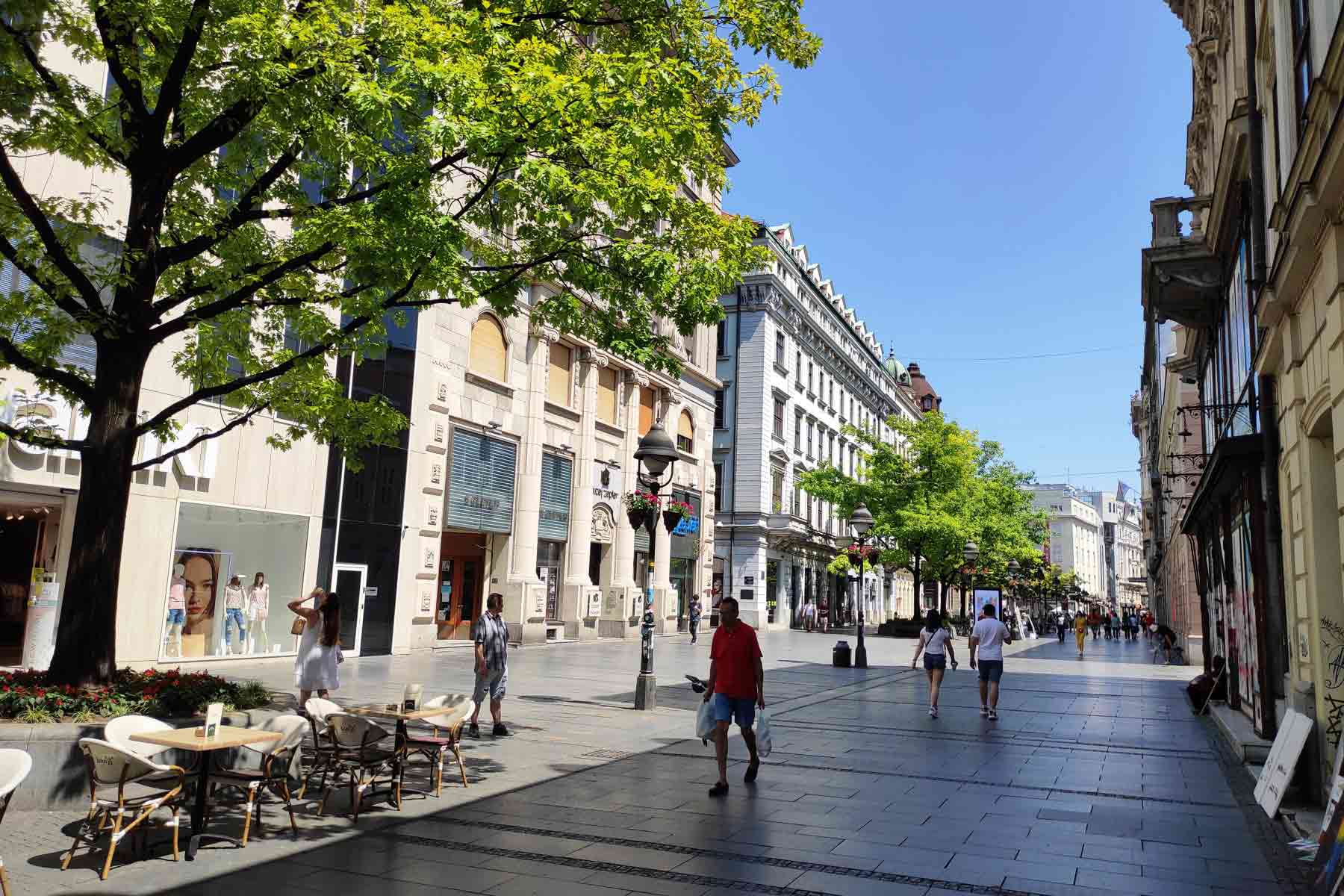
One of the most beautiful entrances to Kalemegdan is from Knez Mihailova Street. This lively pedestrian zone is full of atmosphere. The smell of roasted chestnuts and colorful souvenir stands create a vivid first impression.
Even if you are not planning to shop, it is worth stopping by the small wooden stalls near the entrance. Here, you can find handmade souvenirs, jewelry, decorative items, and even colorful candies that look like they came from a fairy tale.
This small market offers a charming introduction to what follows. The first view of Kalemegdan is powerful, especially when the fortress walls and green park spaces open up in front of you. Nearby, there is also a quieter entrance from Pariska Street via the Small Staircase. This route feels calm and elegant, perfect for a slower, more relaxed walk.
No matter where you enter, Kalemegdan immediately leaves a strong impression. You feel a mix of freedom, history, and the spirit of Belgrade from the very first step.
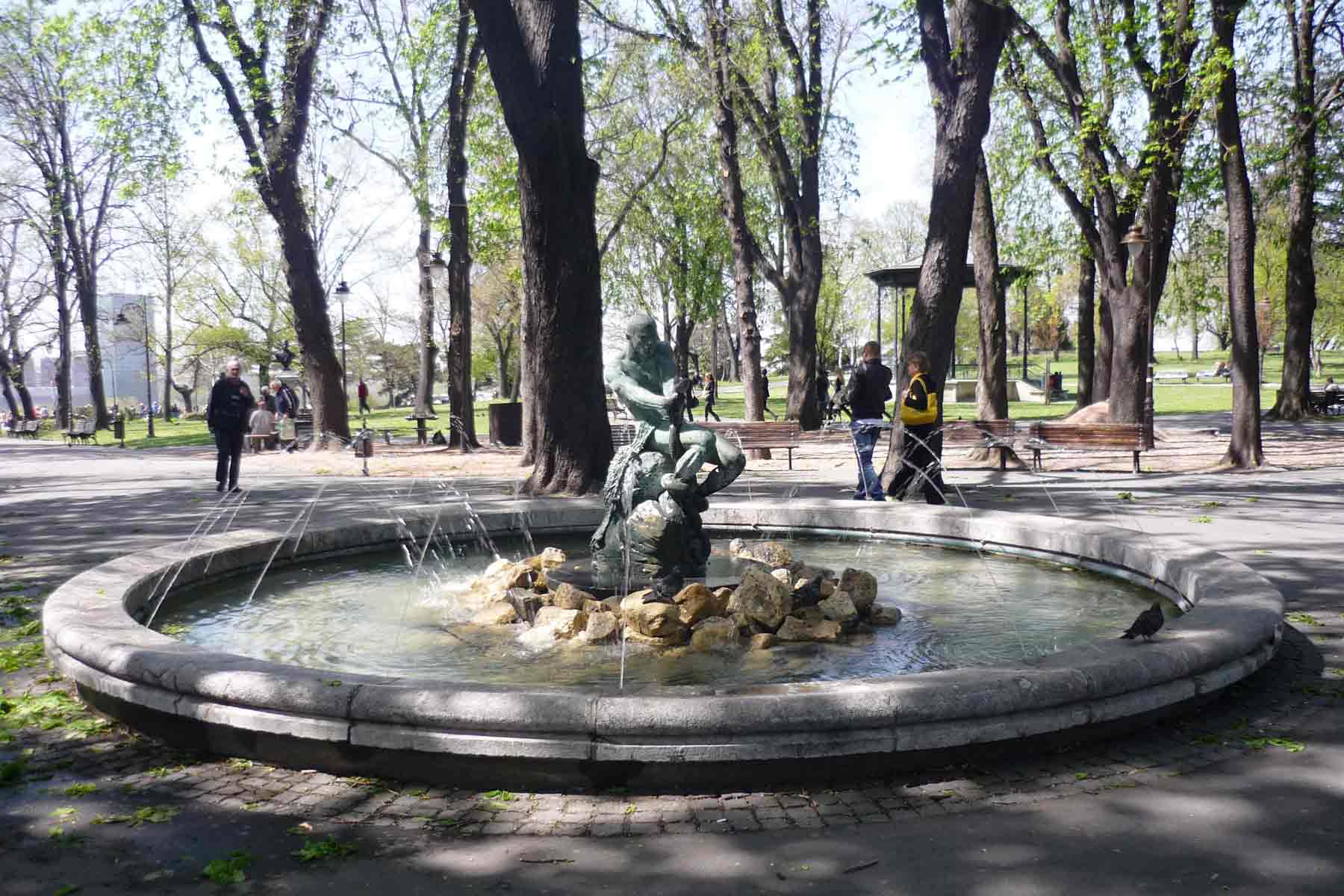
Right after entering, whether from Knez Mihailova or the quieter Small Staircase, numerous paths open before you. They lead through different parts of Kalemegdan. One of the most beautiful paths goes toward the Fisherman fountain and continues down to the Sava promenade.
This area, located between the Great and Small Staircase, is known for its peaceful benches, scenic viewpoints, and relaxed walking rhythm. Whether you come for the views, shade, or simply to pause and enjoy the city from a different perspective, Kalemegdan naturally leads you there.
Kalemegdan is not only a historical landmark. It is also a place for long walks, relaxation in the shade, and unforgettable views of the confluence of the Sava and Danube. Every path leads to a new viewpoint or hidden corner.
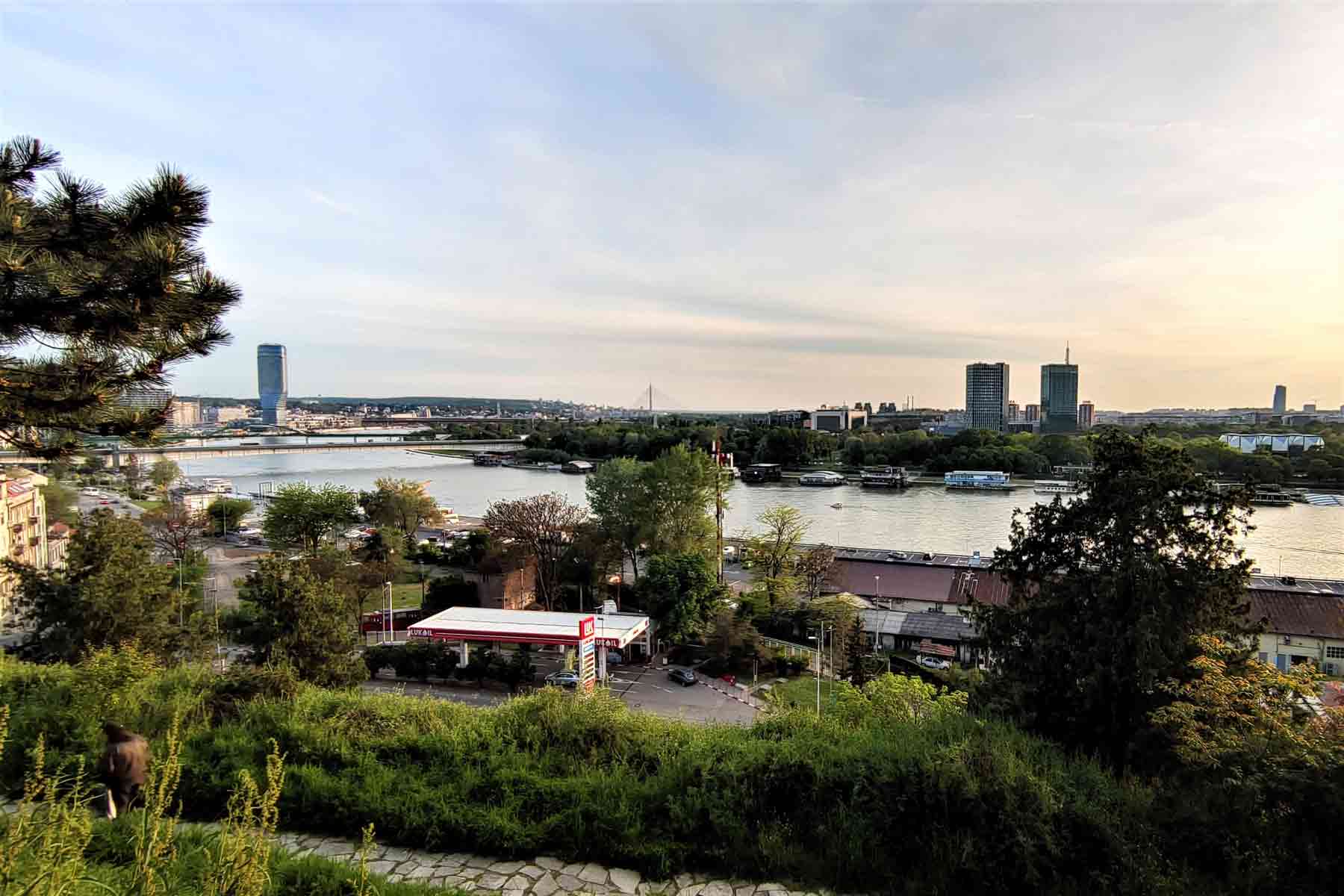
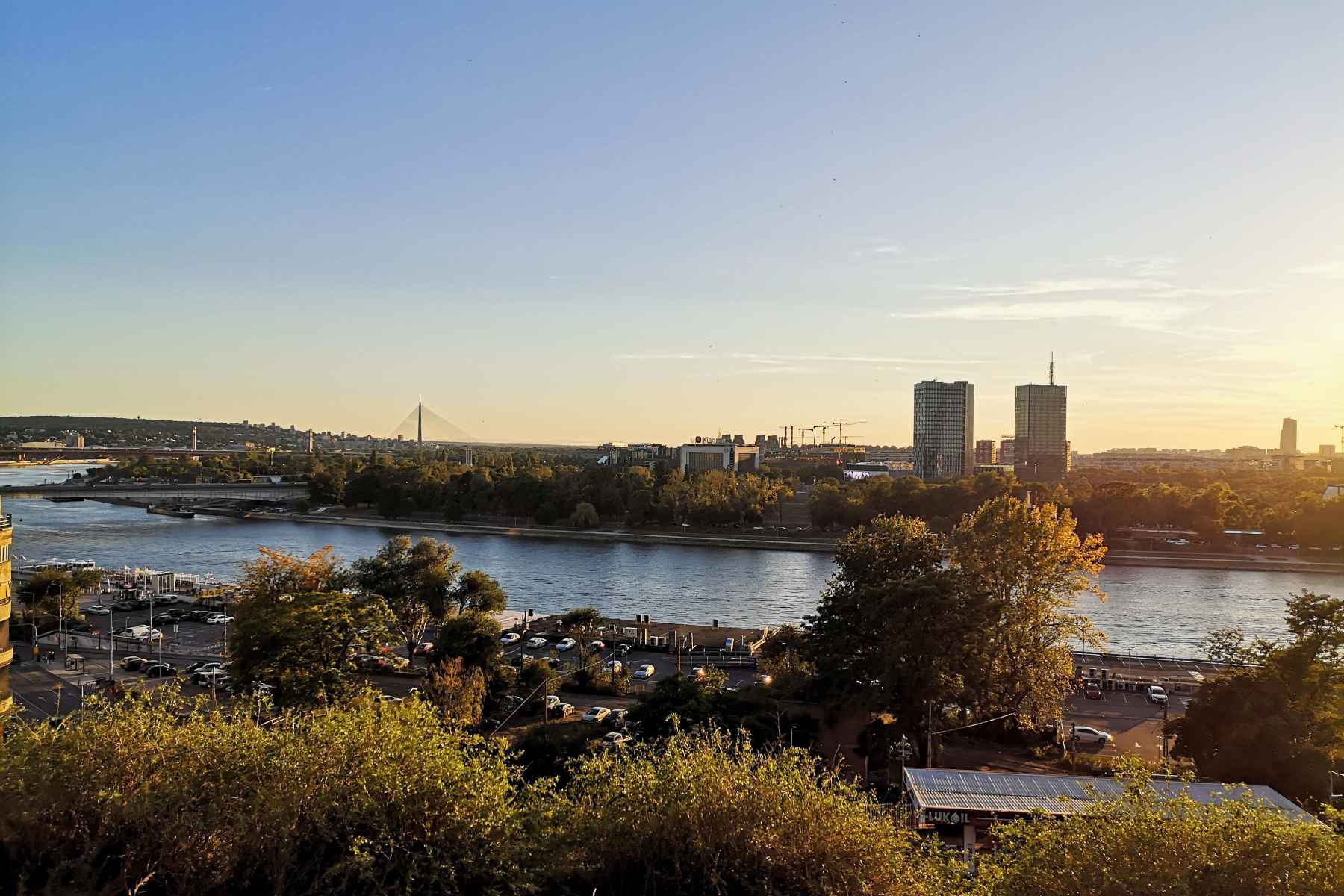
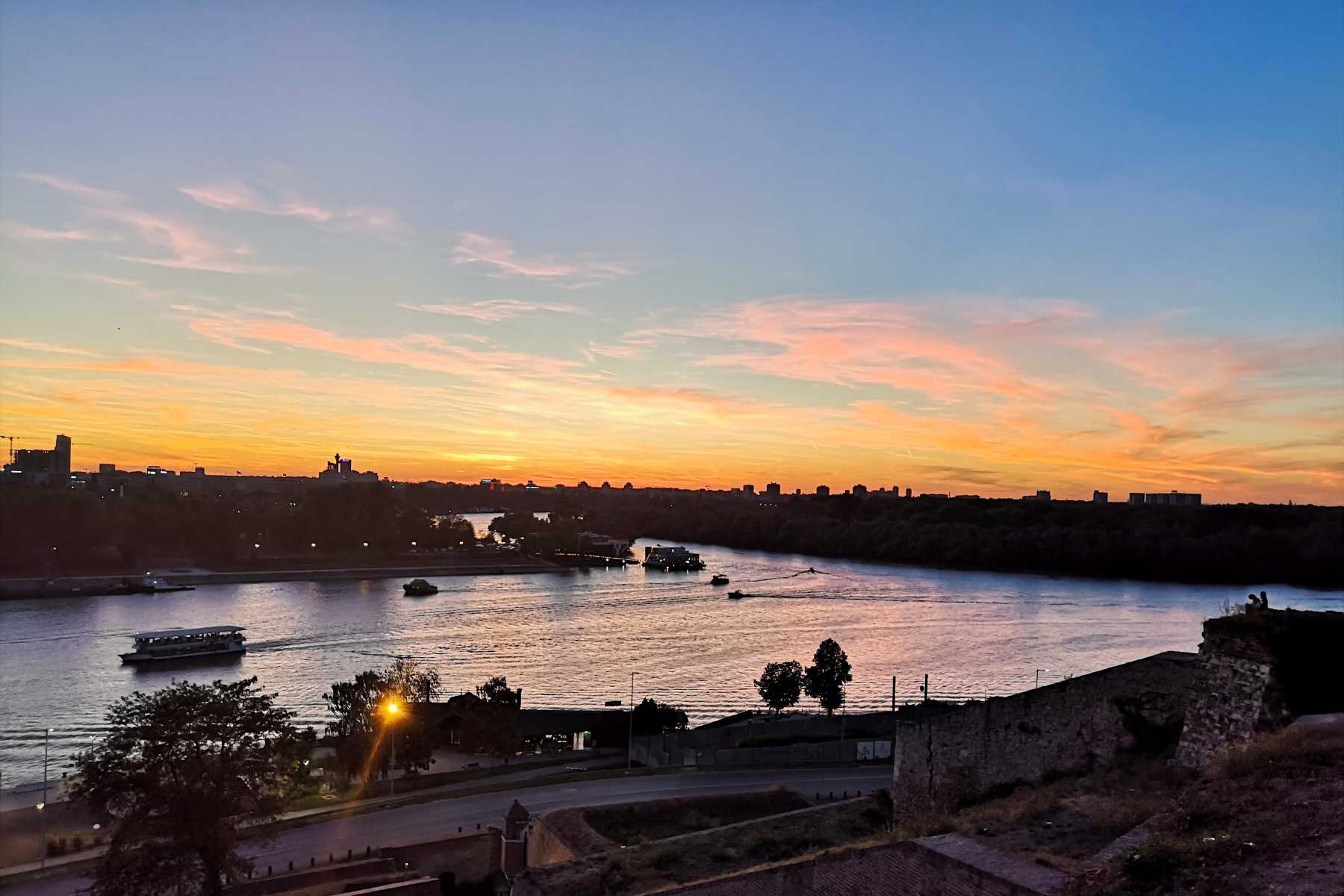
Thanks to its position above the river confluence, Kalemegdan offers breathtaking panoramic views. You can admire New Belgrade, the Great War Island, or even the distant outline of Avala.
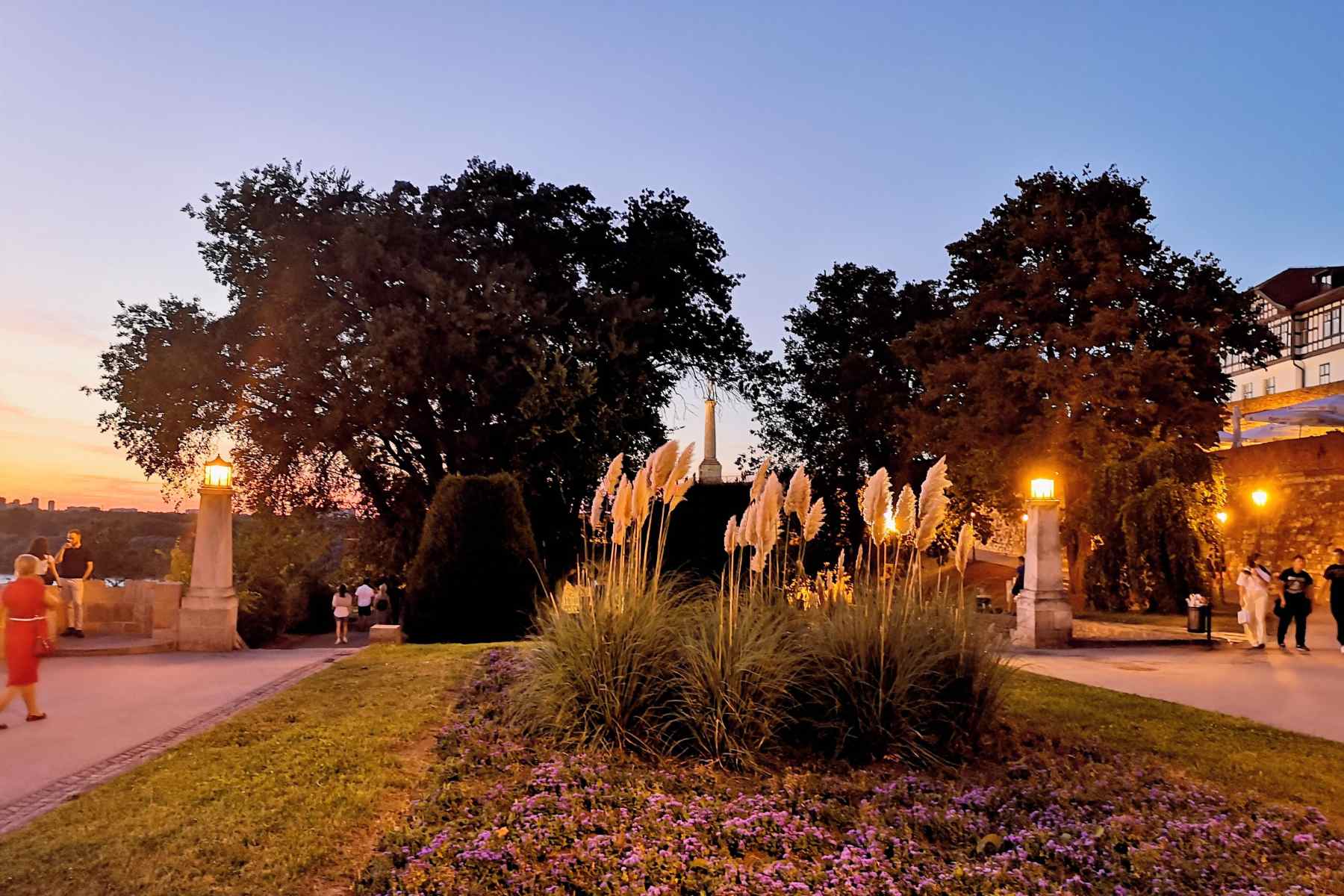
The most popular viewpoints are located in the Upper Town, especially near the Victor Monument and Despot’s Tower. In addition, viewpoints from the plateau below the Great Staircase and along the Sava promenade are equally popular. This area features many benches, making it ideal for resting and enjoying the view.
As a result, this entire zone is one of the most recognizable photo spots in Belgrade. It is perfect for both sightseeing and relaxing with unforgettable views.
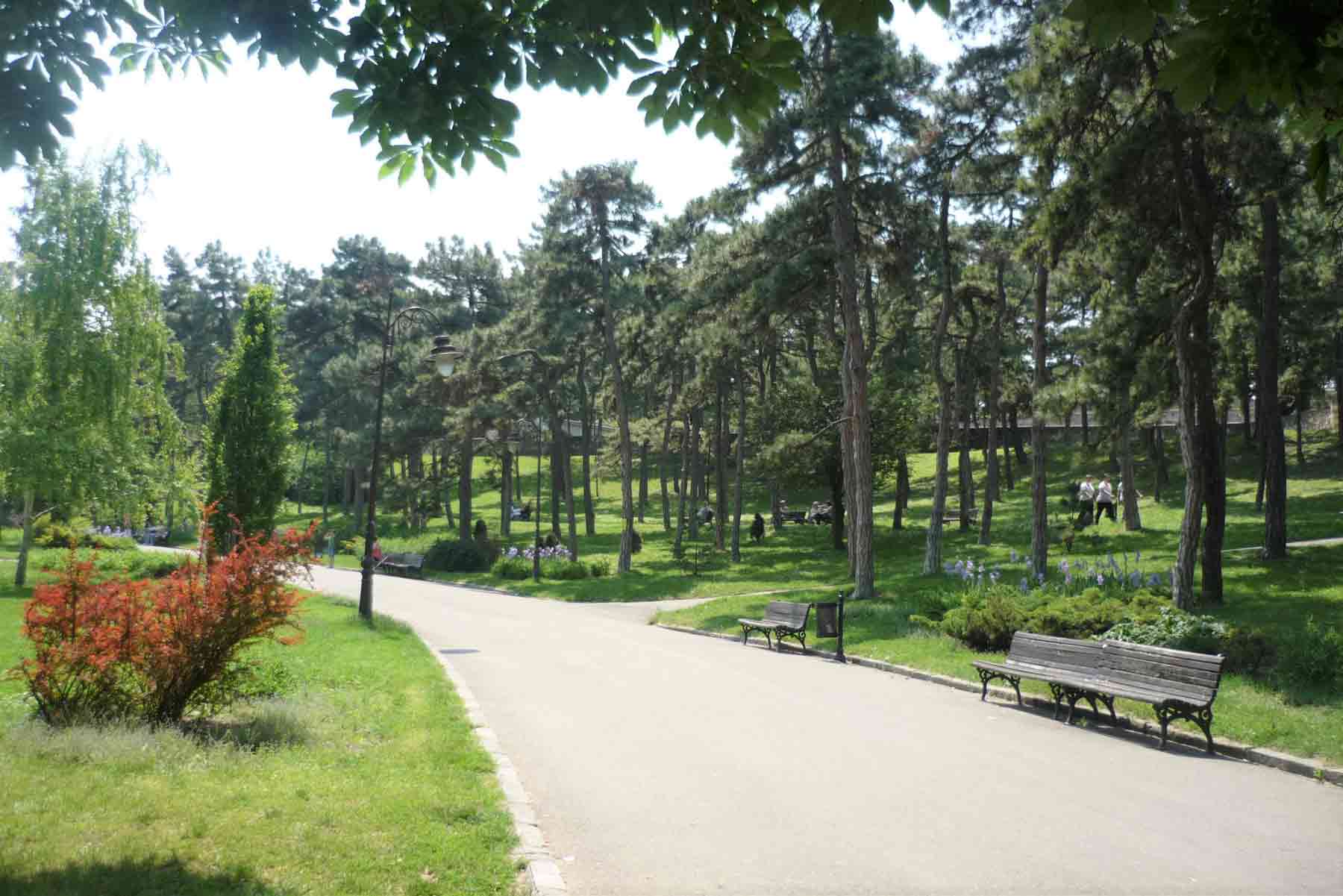
Kalemegdan is full of well-maintained walking and cycling paths. Tree-lined avenues provide shade, while open lawns are perfect for picnics. Benches, flower scents, and a light breeze from the rivers create a relaxing atmosphere.
As you move from the Great Park to the Small Park, the paths take you through alleys of tall trees, decorative shrubs, and carefully maintained flower beds. Along the way, nature blends with culture. Busts, monuments, and fountains appear more frequently, serving as lasting reminders of the history that lives here in the open air.
Kalemegdan is like an open-air museum. It is filled with monuments, busts, and fountains that tell stories about people and events that shaped history. As you walk along these paths, it feels like turning the pages of a living book. Every bust, fountain, and plaque preserves a memory carved in stone and bronze.
One of the most beautiful “pages” of this living memorial is the Alley of Greats. It is a quiet corridor of remembrance, lined with busts of the most important figures in Serbian culture and science. This open-air gallery stretches between the Upper Town and Small Kalemegdan.
Busts of artists, writers, and scientists are placed along the path, creating an atmosphere of respect and reflection. It is also a favorite place for a peaceful walk, rest, and appreciation of cultural heritage.
Kalemegdan preserves the memory of many notable figures. You can find busts dedicated to Stevan Mokranjac, Jovan Dučić, Đura Daničić, Đura Jakšić, Vojislav Ilić, Miloš Crnjanski, Branko Radičević, and others.
In addition to the busts, Kalemegdan is home to many monuments and sculptures. They reflect the city’s turbulent past, important historical moments, and artistic spirit.
The most famous is the Victor Monument, a symbol of Belgrade created by sculptor Ivan Meštrović. Standing high above the confluence of the Sava and Danube, it represents eternal vigilance and freedom.
Nearby, close to Despot’s Tower, you will find the monument to Despot Stefan Lazarević. He was one of the most important Serbian rulers of the Middle Ages and is closely connected to the history of the Belgrade Fortress.
Another landmark is the Monument of Gratitude to France. This impressive work symbolizes friendship and alliance during World War I. Close by, there is also the Key Handover Memorial, marking the end of Ottoman rule in Belgrade.
A special place belongs to the Tomb of National Heroes. It is located on a recessed plateau below the Great Staircase. Here lie important figures from World War II, including Ivo Lola Ribar, Ivan Milutinović, Đuro Đaković, and Moša Pijade. This quiet and minimalistic site reflects an important chapter of history.
Throughout the park, you will also discover artistic sculptures. “The Genius of Death,” “The Tired Fighter,” and “Partisan with Children” are just some of them. These silent figures seem to observe passersby and invite reflection. Their scattered placement makes discovering them part of a unique artistic walk.
The fountains of Kalemegdan are more than decoration. They bring rhythm and freshness to the park. Their sound often blends with birdsong and children’s laughter, creating a calm and relaxing atmosphere.
Among the most famous are the Fisherman Fountain, showing a fisherman casting a net, “Awakening,” an abstract sculpture symbolizing new beginnings, and the elegant Japanese Fountain, a gift from the Japanese embassy that adds a touch of the Far East to Belgrade.
Kalemegdan is not only a park and historical landmark—it is also a large open-air playground. Whether you visit with children, friends, a partner, or alone, there is always something that brings a smile.
Playgrounds – There are two modern playgrounds in Small Kalemegdan. They form the heart of the children’s zone. Whether you are a local parent or visiting with kids, this area offers a safe and inspiring environment for play and exploration.
The smaller playground is located near the Alley of Busts. It offers simple but functional equipment, ideal for a short stop during a walk. The second playground is larger and located closer to the amusement park. It features a distinctive red rubber surface that gently rises like a small hill. Around it, you will find modern climbing frames, swings, seesaws, and play structures suitable for different ages.
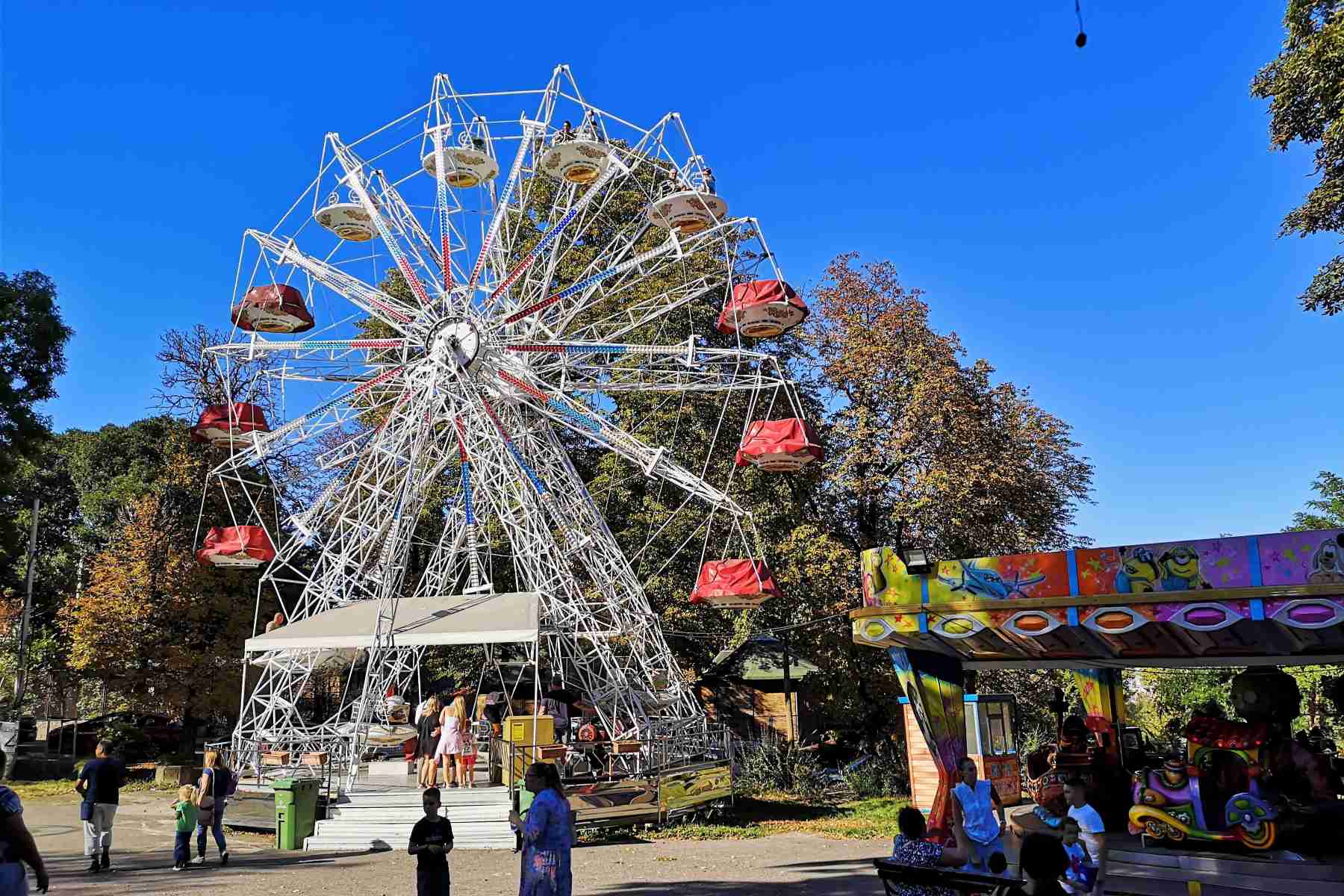
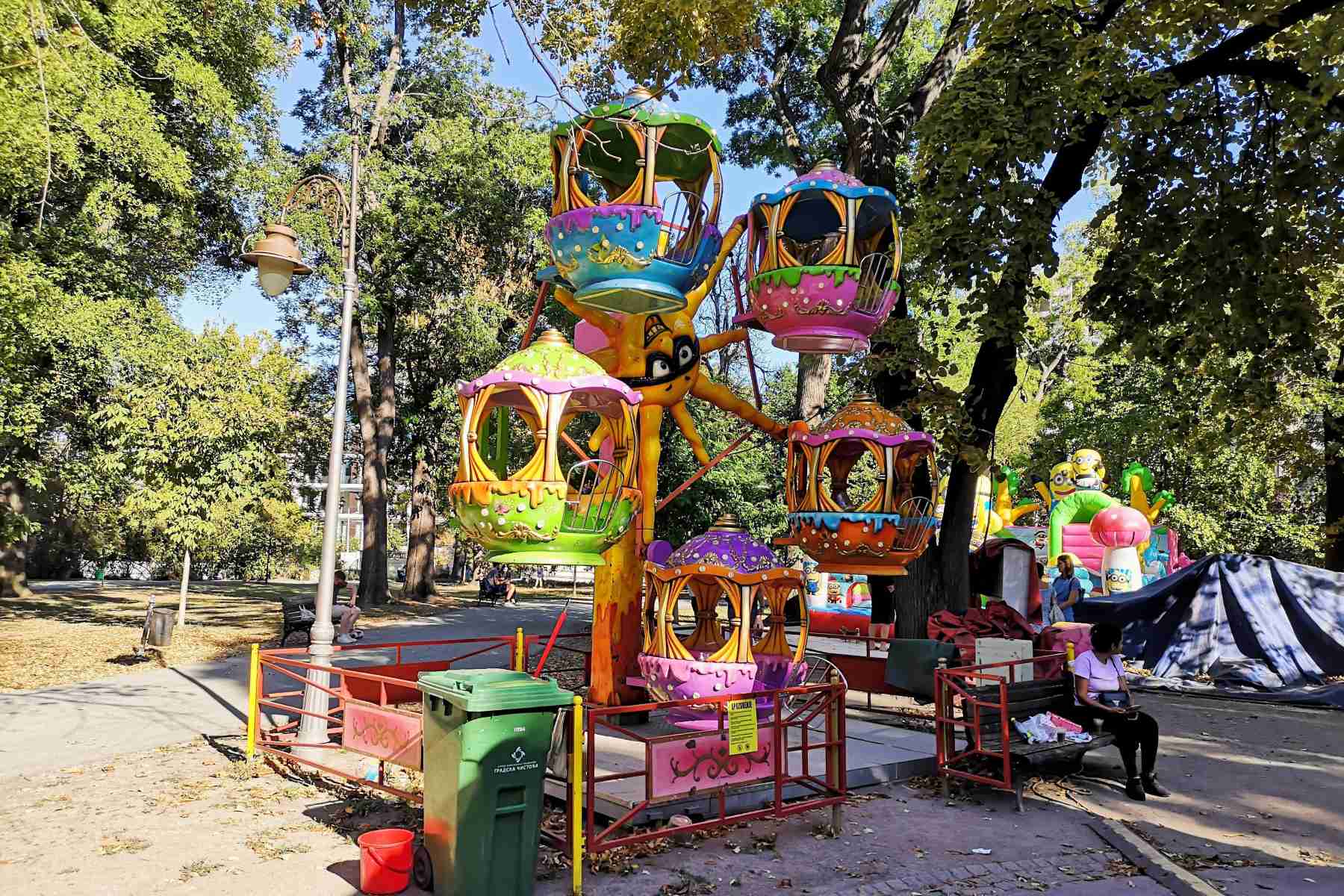
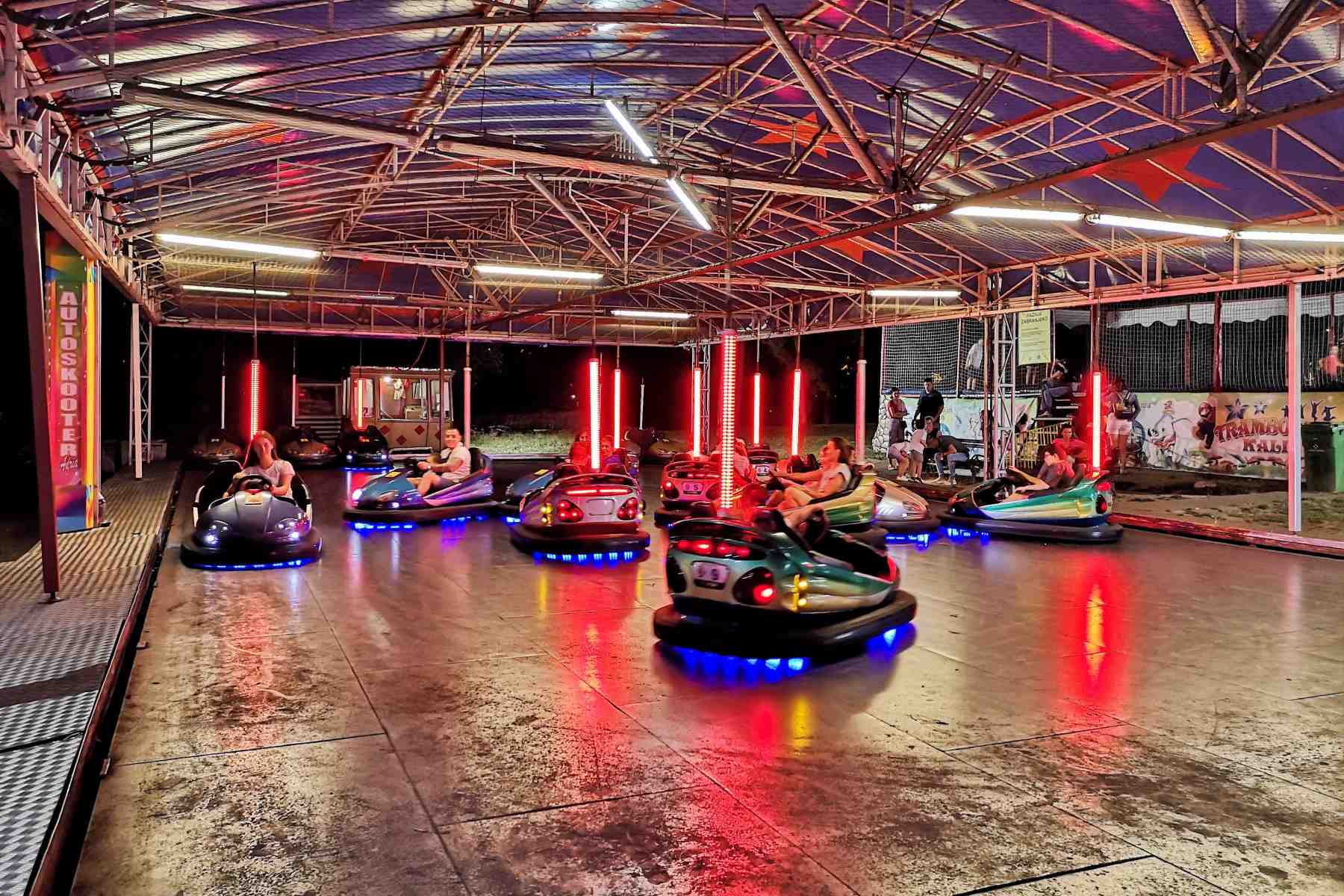
Amusement park (upper) – Near the Alley of Busts, there is a small amusement park designed mainly for younger children. It includes mini carousels, inflatable castles, trampolines, bumper cars, and other rides. Music, lights, and bright colors create a cheerful atmosphere.
Street vendors – While walking through Kalemegdan, you will often see stalls filled with toys, balloons, kites, and small souvenirs. There are also vendors selling cotton candy, popcorn, corn, and sweets. This adds a lively and joyful atmosphere typical of a city park.
Medieval activities – In the Upper Town, medieval fairs are often organized. Between the Clock Tower and Despot’s Tower, events showcase life in the Middle Ages. Visitors can watch armored combat, knight duels, and archery demonstrations. There are also workshops for children. Handmade crafts are displayed, accompanied by medieval and ethno music. Falcons, owls, and other birds often appear, completing the experience.
Amusement park (lower) – Located near the Zoo, this park is designed for older children, teenagers, and adults. It offers bumper cars, carousels, shooting games, and other attractions. One of the highlights is the panoramic wheel. From the top, you can enjoy stunning views of Kalemegdan and Belgrade.
Dino Park – This interactive dinosaur zone is a major attraction for younger visitors. Surrounded by greenery and life-size dinosaur models, children can play, take photos, and learn interesting facts.
Zoo – The famous “Garden of Good Hope” is located in Small Kalemegdan. It is home to over a hundred animal species from all continents. In addition to animals, it offers walking paths, playgrounds, and educational content.
Roman Well – One of the most mysterious places in Kalemegdan. Visitors can look into its depths and feel the atmosphere of past centuries.
Street performers – Musicians, performers, and artists often bring life to the park. Their presence adds spontaneity and creates a pleasant atmosphere similar to European city squares.
Basketball courts – Located in Small Kalemegdan, these courts are iconic. They host tournaments and casual games, often with spectators gathered around.
Tennis courts – Nearby, you will find tennis courts surrounded by greenery. They offer a peaceful place for recreation.
Torture devices exhibition – Inside the fortress casemates, there is a medieval torture exhibition. It is dark but fascinating, offering insight into the harsh realities of history.
Throughout the park, you will find stands offering ice cream, fresh juices, popcorn, corn, and coffee to go. These are perfect for a short break before continuing your walk through Kalemegdan.
If you want to explore even more, Kalemegdan offers a perfect mix of fun and education for all generations. Take your kids to the Zoo or enjoy rides at the amusement park, then continue exploring culture and history.
Discover the stories of the Military Museum and the Natural History Museum Gallery. Dive deeper into history with the medieval torture exhibition, the Jura Adventure, and a visit to the Roman Well. Across the street, you can also visit the Chocolate Museum.
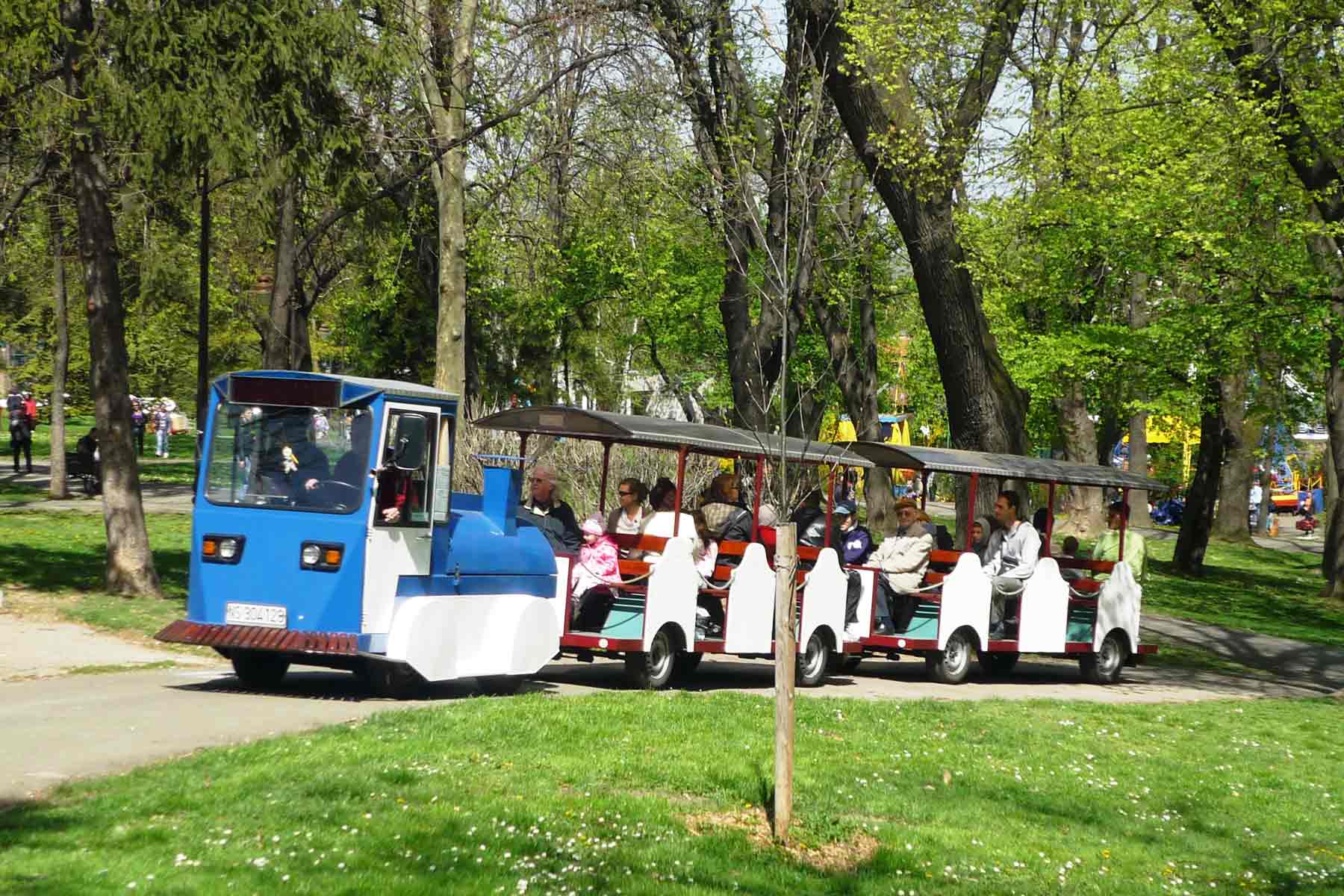
If walking is not your thing, you can explore Kalemegdan in a more relaxed way—by taking the charming tourist train that circles the park and stops at many key attractions.
Where can you find the Kalemegdan train? The tourist train departs from a stop near the path leading from Knez Mihailova Street toward the Monument of Gratitude to France. Just before the turn toward the Fisherman Fountain, you will find its starting point. From there, it follows a circular route around Kalemegdan, making it ideal for families with children who want to see the main attractions in a short time.
This easy and enjoyable ride is perfect for families, older visitors, and anyone who wants to take a break while exploring. At the same time, it allows you to experience every corner of this historic setting without missing important details. While children enjoy the ride and greenery, you can relax and take in postcard-like views of Belgrade. The ticket price is 250 RSD, and departures usually run every 15–20 minutes.
The route starts near the Fisherman Fountain and continues through the park and children’s playgrounds in Small Kalemegdan. It then heads toward the basketball courts before continuing to the Clock Gate. From there, it passes the plateau near Damad Ali Pasha’s türbe and moves toward the building of the Institute for the Protection of Cultural Monuments of Belgrade.
The train then travels through the Upper Town paths toward Dizdar’s Tower, before returning past the Clock Tower and along the same route. It passes the Fisherman Fountain again and reaches the Great Staircase, where it turns around. Finally, it continues across the plateau toward the Small Staircase and back to the starting point.
Kalemegdan is not only a historical and recreational center—it is also an open-air stage for art. During warmer days, the park comes alive with creativity. Street artists, painters, and musicians bring energy to the space. Here, art is not observed from a distance—it is experienced up close, often during a simple walk through Kalemegdan.
Located in the shade of tree-lined paths, the Music Pavilion is one of the most charming spots in the park. During summer evenings, it becomes a stage for concerts, cultural programs, and small gatherings. Because of its elegant look, it is also a popular place for wedding photography.
Around the pavilion, you will find several artistic sculptures. Among the most notable are “The Genius of Death,” “The Tired Fighter,” and “Partisan with Children.” These quiet figures act as guardians of the past and invite reflection.
For lovers of visual arts, the Cvijeta Zuzorić Pavilion offers a wide range of exhibitions. These include both contemporary artists and classical works. Located in the heart of the park, surrounded by greenery and calmness, it provides a refreshing contrast to the city’s busy streets.
A visit to an exhibition, combined with a walk to a viewpoint and a panoramic view of Belgrade, creates a perfect cultural escape.
Throughout the year, Kalemegdan hosts various outdoor events. The most famous is Belgrade Manifest, a family-friendly festival that combines entertainment, food, and culture. In addition, events like the Balkan Food Festival and the World Gastro Festival attract food lovers from across the region.
Kalemegdan is also part of the Night of Museums and often serves as a stage for performances and concerts during the BITEF festival.
Kalemegdan has always been a place where the city meets emotion. Walking under the trees, watching the sunset from a viewpoint, or enjoying the silence of the Music Pavilion makes it a perfect destination for couples.
Many couples take their first photos here, while newlyweds choose this location for wedding portraits. A romantic walk through Kalemegdan becomes a memorable experience, enhanced by breathtaking views of Belgrade.
After a walk or sightseeing, Kalemegdan offers great places to relax with food and drinks. The most famous is Kalemegdan Terrace, an elegant restaurant with a stunning view of the confluence of the Sava and Danube.
For a more casual atmosphere, Kahvana Mali Kalemegdan preserves the spirit of old Belgrade and is popular among locals. Nearby, Café Pobednik offers unforgettable views of the Sava and New Belgrade, making it perfect for a coffee break.
A walk through Kalemegdan can easily end with a dinner with a view, combining history, nature, and enjoyment.
Close to Kalemegdan, you will find the Cathedral Church, Knez Mihailova Street, and the historic buildings of the old city center. A walk through Kalemegdan naturally continues into exploring the Old Town.
👉Where it all began – Old Town (Stari Grad) ⚓
There are many benches throughout the park for resting, as well as public toilets located near the amusement park.
Is entry to Kalemegdan free? Yes, entry to Kalemegdan Park and Belgrade Fortress is completely free throughout the day, making it one of the most accessible attractions in Belgrade.
The park is open all day, but visiting in the morning or late afternoon is recommended due to more pleasant temperatures and beautiful sunsets.
Whether you are arriving on foot, by car, or by public transport – Kalemegdan Park and Belgrade Fortress are easily accessible from all parts of Belgrade. Located in the city center, this area is one of the most visited attractions and a starting point for exploring the historic heart of the city.
For those arriving by car, the closest option is Kalemegdan parking – located directly within Kalemegdan Park and the Belgrade Fortress complex. Nearby, you can also find Vidin Gate parking, although these are smaller parking areas that tend to fill up quickly, especially on weekends and during good weather.
Alternatively, you can use larger parking areas such as Milan Gale Muškatirović parking and Donji Grad parking, both offering over 300 parking spaces and a short walking distance to Kalemegdan.
Street parking is also available in nearby streets, but be sure to check the parking zones map and
pricing and payment system before parking.
If you choose public transport, several lines will take you close to Kalemegdan, with the nearest stops located within walking distance of the park:
Braće Baruh: trams 2, 2L, 5 and 10, buses 24 and 79.
Pristanište: trams 2 and 11.
Studentski Trg: trolleybuses 28, 29 and 41, buses 22A, 31, EKO2 and minibus line E9.
Kalemegdan Park invites you to explore its scenic paths, viewpoints, and historic landmarks. Whether you arrive on foot, by public transport, or by car, your visit to one of the most iconic places in Belgrade begins with a pleasant walk through this unique park-fortress complex.
 Explore Belgrade Fortress