5/5 - (8 votes)
Temple of Saint Sava – The Largest Orthodox Church in the Balkans
⛪ Temple of Saint Sava – guide (+)
-
-
- 📜 History of the Temple of Saint Sava
- 🏛️ Architecture and dimensions of the temple
- 🎨 The interior and mosaic of Christ Pantocrator
- 🔔 The crypt, bells and spiritual significance
- 🌳 Svetosavski Plateau and Karađorđe Park
- 📖 Who was Saint Sava?
- ⛪ Saint Sava and the foundation of the Serbian Church
- 📍 Visiting the Temple of Saint Sava
- ⭐ Why visit the Temple of Saint Sava?
- 🗺️ Temple of Saint Sava – location map
- 🏛️ What to explore nearby…
-
Temple of Saint Sava – the spiritual symbol and a top attraction of Belgrade
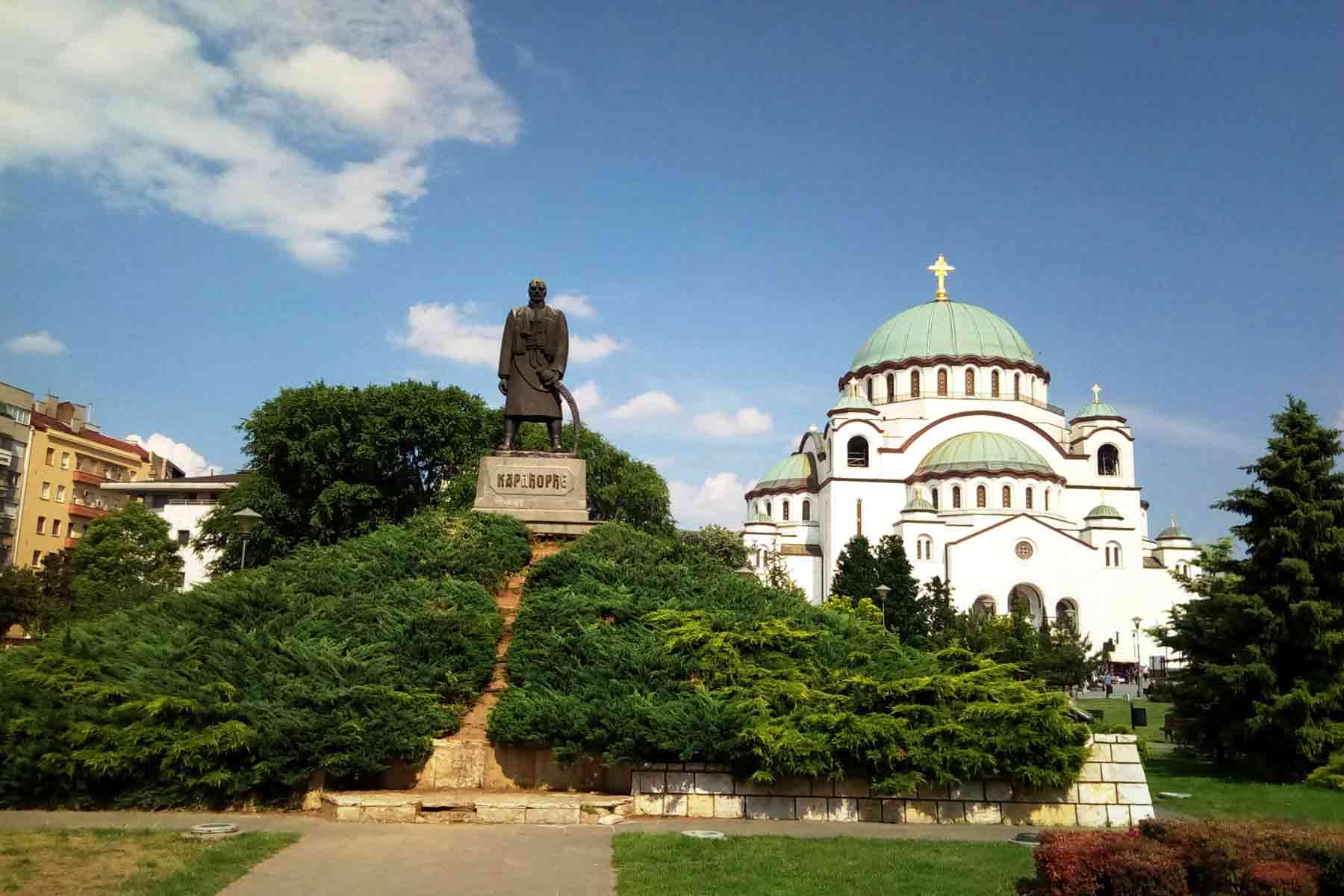
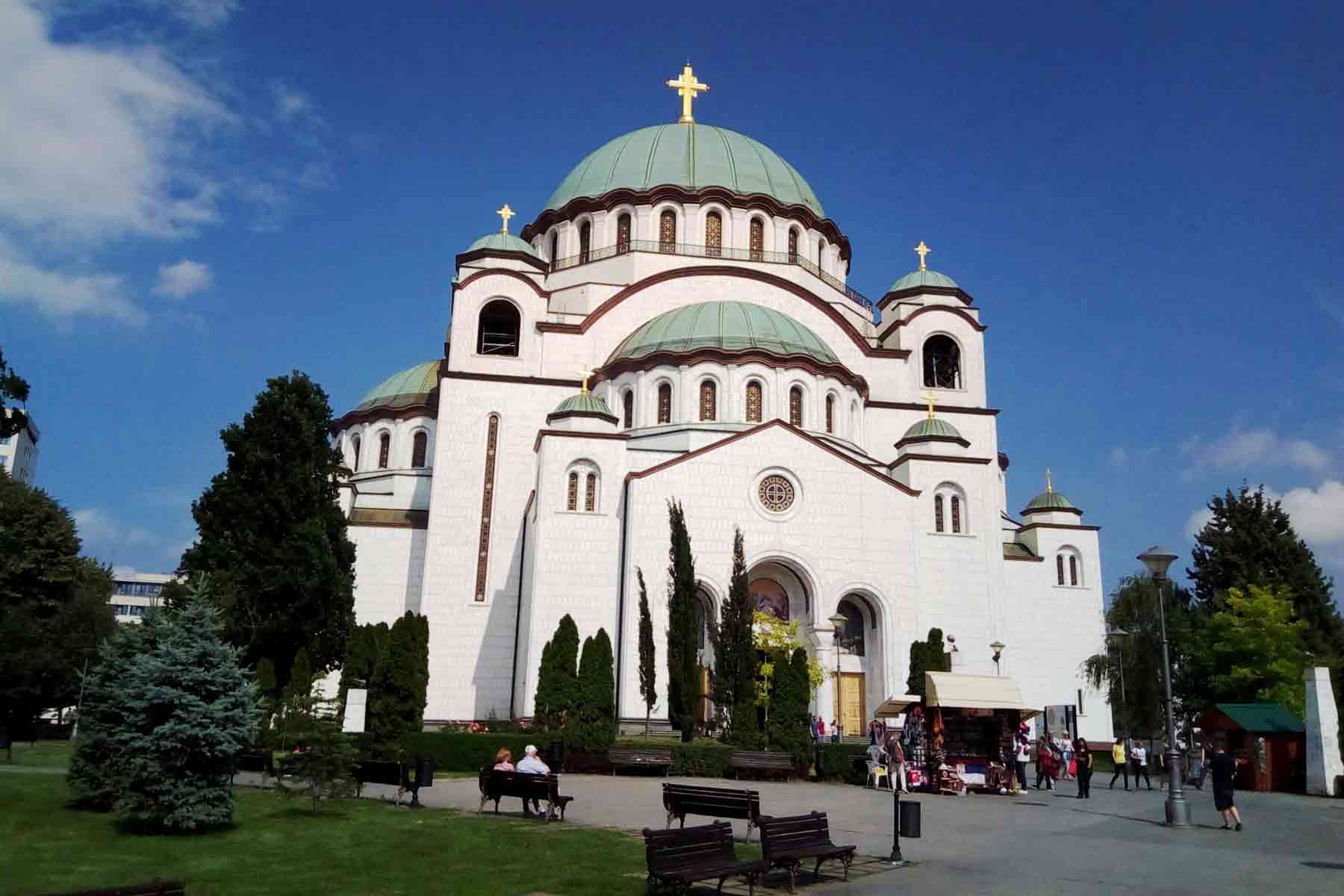
The Temple of Saint Sava is one of the main landmarks of Belgrade and a key attraction for tourism in Serbia. It is located in the municipality of Vračar, on the Svetosavski Plateau, and represents the largest Orthodox church in the Balkans. It is consistently ranked among the top 10 attractions in Belgrade and remains one of the most important places to visit in Serbia.
History of the Temple of Saint Sava
It was built on the site where the Ottomans burned the relics of Saint Sava, most likely in 1594. The reason for burning the relics was the strength of the cult of Saint Sava among the Serbian people. The act itself followed an uprising of the Serbian people against the Ottoman Empire.
The construction was funded entirely through voluntary donations. Building of the temple began before World War II, but the most intensive works took place in the 1980s. At the beginning of this century, significant funds for completing the exterior were collected through donor events.
Architecture and dimensions of the temple
The base area covers around 3,500 square meters in the shape of a Greek cross. The height of the temple, including the cross, is about 80 meters, and it was built in the Serbian-Byzantine style. This monumental scale makes it a centerpiece of Belgrade sightseeing tours.
The main dome reaches a height of 27 meters, and there are a total of 13 domes, including 5 semi-domes and 5 smaller domes behind the altar. The central dome was constructed on the ground and then lifted into place over a period of 40 days, representing a major engineering achievement.
The interior and mosaic of Christ Pantocrator
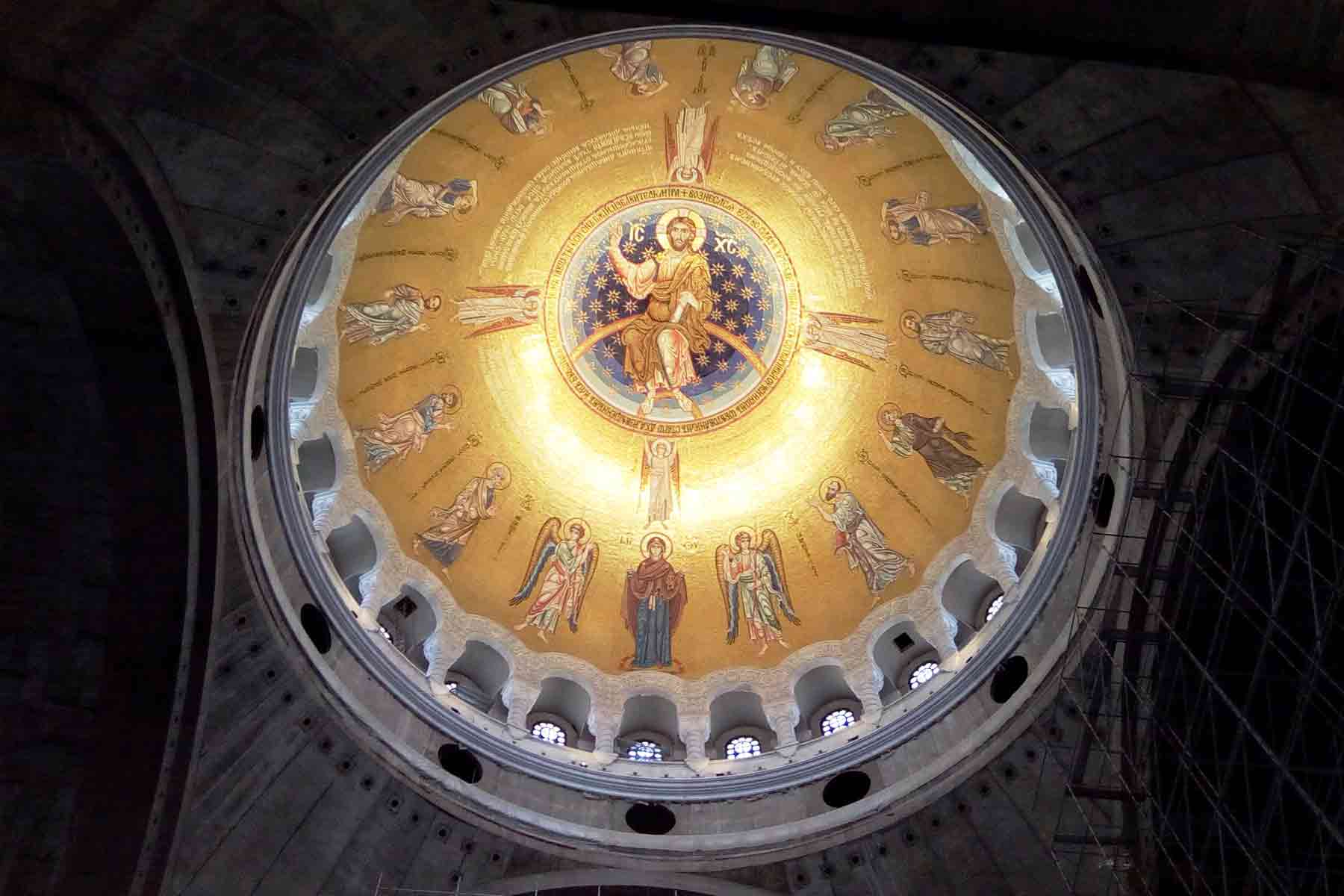
The interior of the temple is dominated by the main dome featuring the mosaic of Christ Pantocrator. At the center of the composition is the scene of the “Ascension of Christ”, with the Savior in His heavenly glory and the Most Holy Mother of God.
Surrounding them are archangels and the Holy Apostles standing before Him. The project was carried out by a team of as many as 70 Serbian and Russian artists under the leadership of academician Nikolay Mukhin of the Russian Academy of Arts.
The view of this mosaic is simply breathtaking and represents one of the most impressive interiors among Orthodox churches in Europe, making it a must-see Belgrade experience.
The crypt, bells and spiritual significance
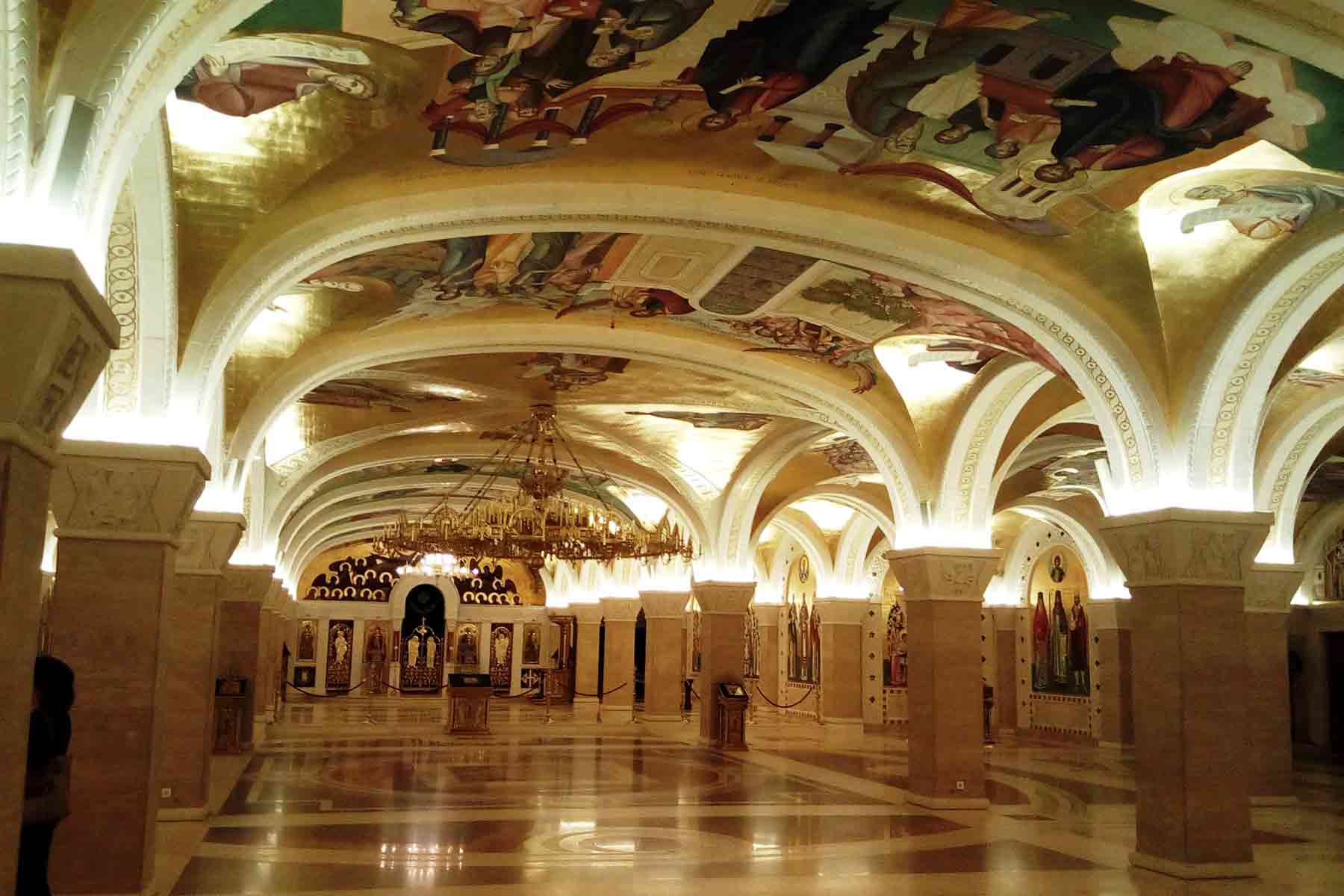
In the underground level, there are rooms intended for the treasury as well as the burial church of Saint Prince Lazar, located 7 meters below ground. The temple has 49 bells of different sizes.
The main entrance is on the western side, with additional entrances from the south and north. The temple can accommodate up to 10,000 worshippers, while the choir gallery can hold an additional 800 singers.
Although this temple is spectacular in terms of construction and architecture, it should also be visited for its spiritual significance. Interestingly, it is visible from many locations across Belgrade, making it one of the most recognizable landmarks of the city.
⛪ Belgrade: Saint Sava Temple Guided Tour
Discover one of the largest Orthodox churches in the world with a professional guide. Learn about its history, architecture, and breathtaking mosaics.
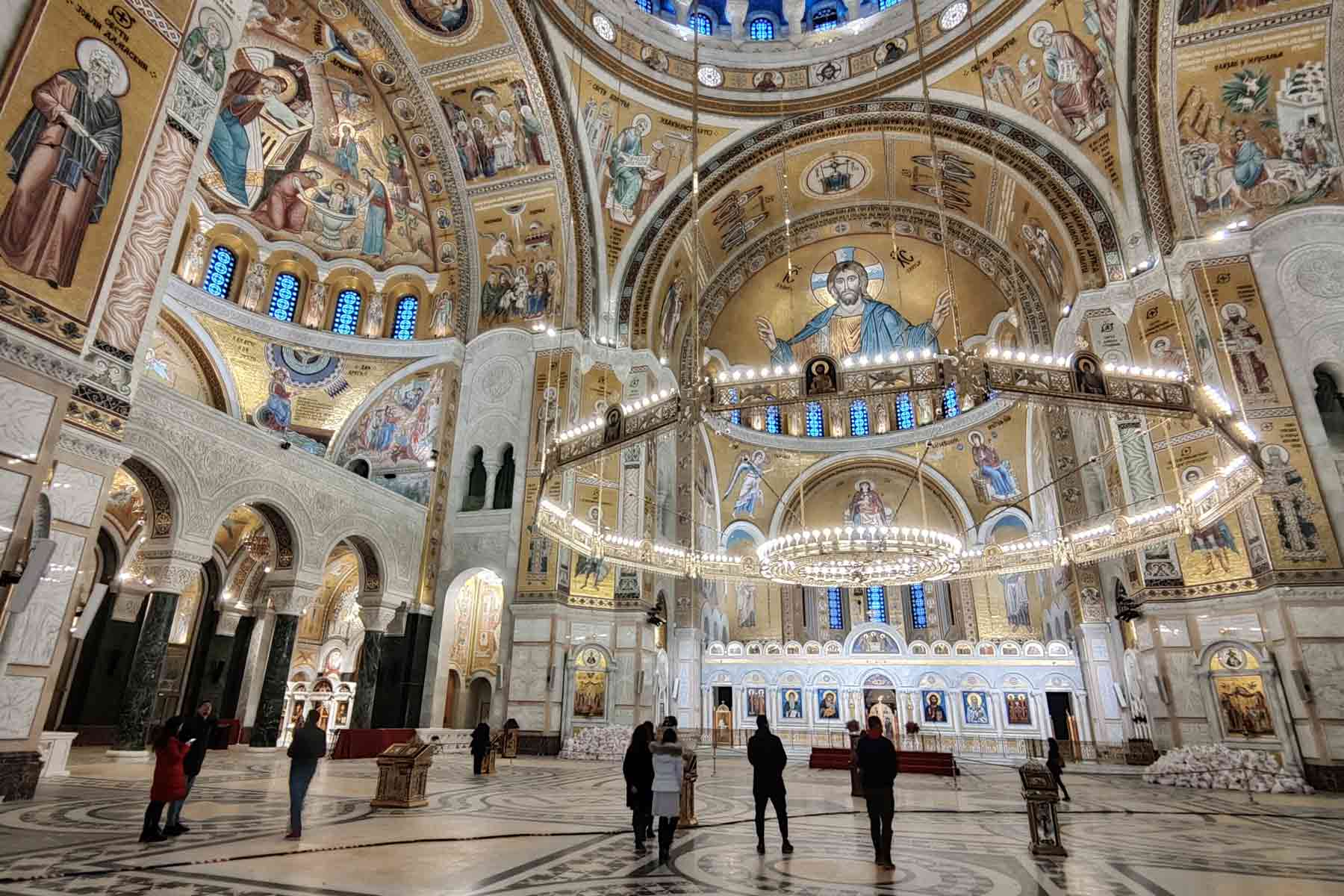
Explore the magnificent interior, admire the monumental Christ Pantocrator mosaic, and discover fascinating stories behind one of Belgrade’s most iconic landmarks.
Powered by
GetYourGuide
GetYourGuide
Svetosavski Plateau and Karađorđe Park – Belgrade sightseeing
The plateau in front of the Temple of Saint Sava has recently been renovated and arranged so that together with the nearby Karađorđe Park it forms a unified space.
Here you can enjoy your free time in a peaceful and open setting. The parks of Belgrade can proudly present the Svetosavski Plateau, which is an essential part of any Belgrade walking tour.
Together with Karađorđe Park, they represent one of the most beautiful combinations of nature and culture in the city.
The surrounding area offers an attractive selection of restaurants, cafés and places to relax, creating all the elements for a perfect day in Belgrade.
The Temple of Saint Sava is illuminated, allowing visits even during the evening hours. Numerous events in Belgrade are often held on the plateau.
In addition to the temple, the plateau itself and the color-changing fountain are also beautifully lit. In front of the temple, on the plateau, there is also a monument dedicated to Saint Sava.
Who was Saint Sava?
Saint Sava was born as Rastko Nemanjić, the youngest son of Stefan Nemanja and the younger brother of Vukan Nemanjić and Stefan the First-Crowned.
Although he was a Serbian nobleman, entrusted by his father with the administration of Zahumlje, he left for Mount Athos where he became a monk in 1192 and received the name Sava.
Later, when Stefan Nemanja abdicated and passed the rule to his middle son Stefan the First-Crowned, he too took monastic vows, received the name Simeon and joined his youngest son in 1196.
Together they founded the Hilandar Monastery, the first and only Serbian monastery on Mount Athos.
Saint Sava and the foundation of the Serbian Church
After the death of Simeon and the conflict between the older brothers, Saint Sava returned to Serbia in 1208.
At the relics of their father, in the Studenica Monastery, Sava officially reconciled his brothers Stefan the First-Crowned and Vukan.
Until 1217, he built churches and monasteries, engaged in educational work and spread religious teachings.
He also founded the first hospital on the territory of the Serbian state, after which he returned again to Mount Athos.
Stefan the First-Crowned was crowned king in 1217, and in 1219 Saint Sava secured the autocephaly (independence) of the Serbian Church with the status of an archbishopric.
He himself became the first Serbian archbishop, a position he held until 1233.
After stepping down from the position of archbishop, he traveled twice to the Holy Land, to Palestine, and on his return from the second journey he died in 1236 in Bulgaria.
January 27 is celebrated as Saint Sava Day, a holiday of the Serbian Orthodox Church, and it is also observed as a school celebration.
Visiting the Temple of Saint Sava: Practical Information
Nearby, there are numerous cultural landmarks, historic houses in Belgrade, as well as restaurants, pastry shops, cafés and well-known wineries where you can stop for refreshments.
Accommodation in Belgrade, especially in the municipality of Vračar, can be found almost everywhere, which is why we highly recommend this area as a base for exploring Belgrade and Serbia.
Why visit the Temple of Saint Sava?
The Temple of Saint Sava is considered one of the top things to do in Belgrade and a must-see attraction for anyone visiting Serbia.
As one of the largest Orthodox churches in the world, it represents a unique blend of spiritual significance, monumental architecture and cultural heritage, making it a highlight of Belgrade sightseeing.
🗺️ Where is the Temple of Saint Sava located?
The Temple of Saint Sava is situated on the Svetosavski Plateau in the Vračar municipality, right in the heart of Belgrade. Its dominant position makes it easily visible from many parts of the city.
On the map below, you can see the exact location of the temple, helping you plan your visit whether you arrive by car, public transport, or on foot.