5/5 - (4 votes)
Roman Well
🕯️ Roman Well – Contents (+)
🕯️ Roman Well – the dark secret beneath Belgrade
Silence. Just the sound of footsteps and the cold breath of stone as the spiral staircase disappears into the depths. The light from above fades away, and ahead lies the dark heart of Belgrade Fortress – the Roman Well in Belgrade, a place surrounded by legends, mysteries, and eerie stories for centuries. For that reason, it is considered one of the most famous Belgrade legends, a site that continues to spark the imagination of visitors and local storytellers.
They say this is the most mysterious structure in the city, even though it is “neither Roman, nor a well.” Some claim that prisoners once passed through its walls, others believe that secret underground tunnels of Belgrade lie beneath it, while some are convinced that echoes of long-lost voices can still be heard. If you are drawn to the mysteries of Belgrade and hidden places beneath the city, this is one of those locations you should not miss.
ℹ️ Visitor information – Roman Well
💰 Tickets: Regular 170 RSD; Students / pupils / pensioners 100 RSD.
🕐 Opening hours (Tuesday – Sunday):
• 11:00 – 19:00 (April 1 – September 30)
• 10:00 – 17:00 (October 1 – October 31)
* Last tickets: 18:30 (summer) / 16:30 (autumn).
** Note: Group visits require prior notice (November 1 – March 31).
📍 Location: Belgrade Fortress, Upper Town. Entrance near King’s Gate and the plateau by the Victor Monument.
🚗 Parking: Nearest options – Kalemegdan garage and Vidin Gate (Lower Town).
🔗 Note: For the latest updates on opening hours and ticket prices, check the official website:
👉 Visitor info – Belgrade Fortress
🏰 History and origin of the Roman Well
This is not an ordinary structure – every stone of the Roman Well carries traces of centuries. Below, you’ll discover how it was built and why it received the name it has today.
Roman Well Belgrade – Austrian construction and the legend of the Romans
Although it is called “Roman,” the well actually dates back to the period of Austrian rule (1717–1739). The name “Roman” was given later, as many believed that such a deep and precisely built structure could only have been created by the ancient Romans. It was originally constructed to supply the fortress with water, but its true purpose is still debated today.
“Neither Roman, nor a well”
In reality, it is not a traditional well but a complex system of spiral staircases and channels, about 51 meters deep, making it one of the deepest structures in Belgrade. Over time, it lost its practical function and became a source of legends and urban myths.
🚪 What a visit to the Roman Well looks like
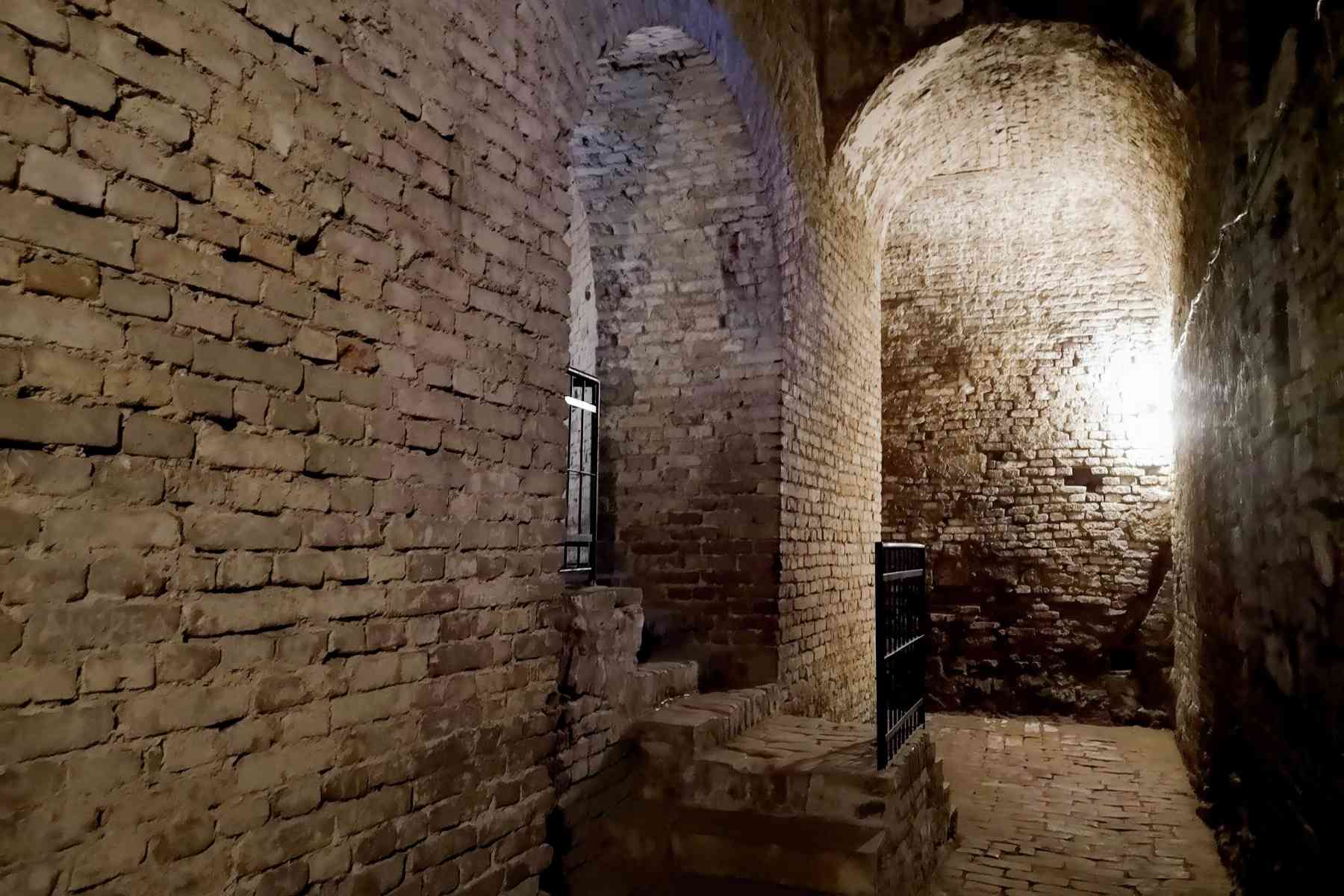
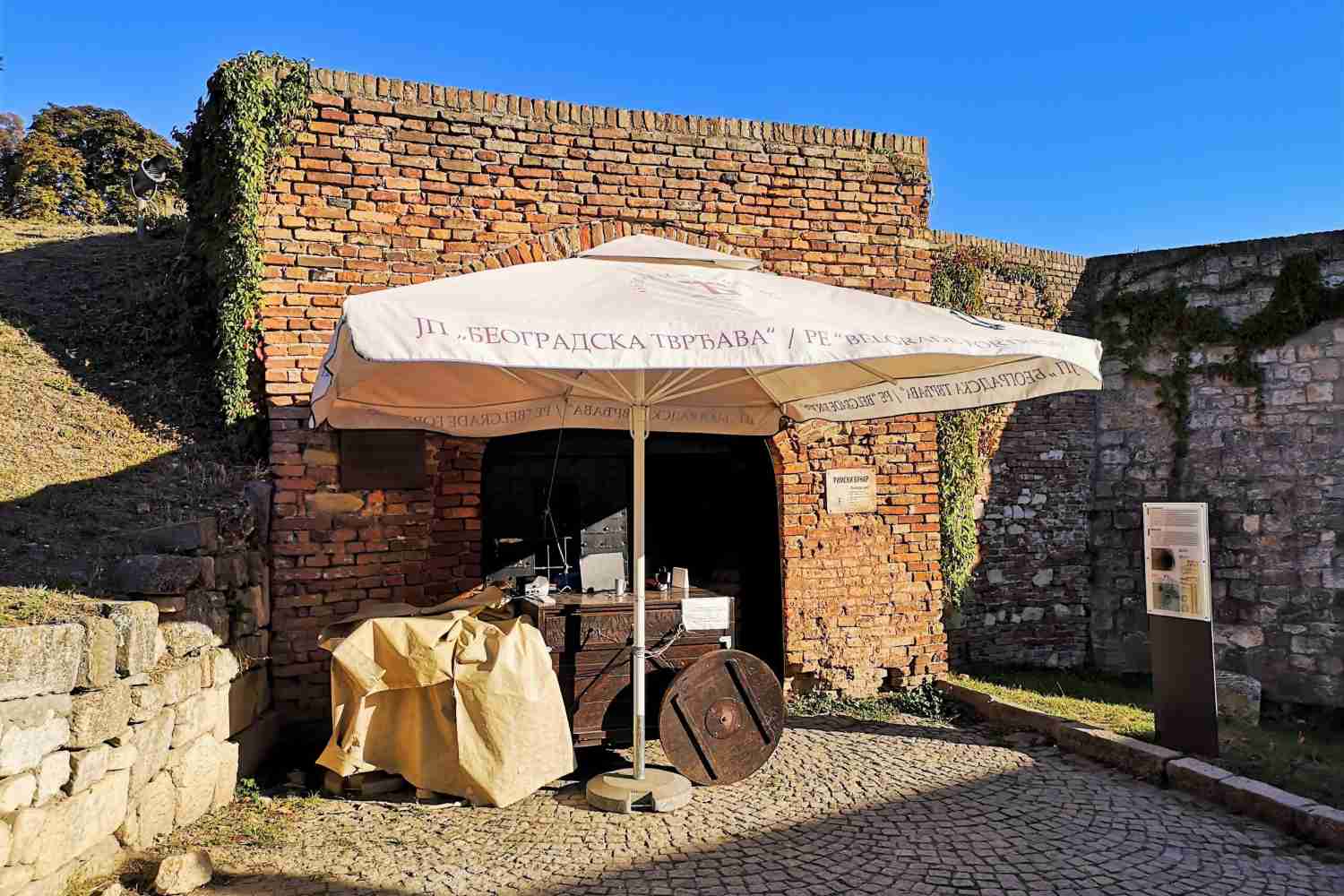
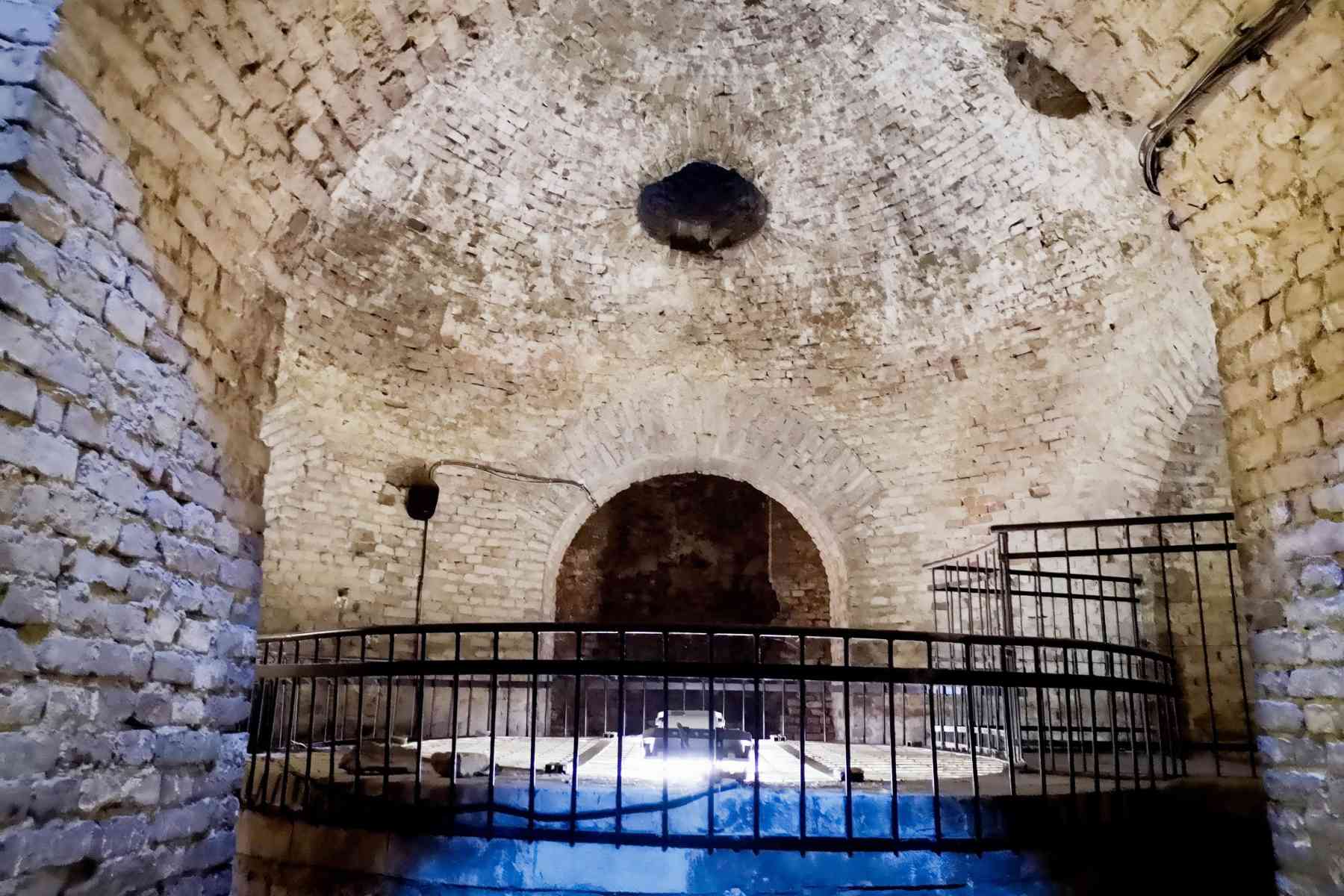
The entrance to the Roman Well appears modest, almost like many other passages and gates within the fortress. It is set into an old brick wall, sometimes covered with ivy and creeping plants that blend naturally with the surroundings. A black metal door leads into a narrow corridor with a curved ceiling, where you can immediately feel the cool, stone breath of the past.
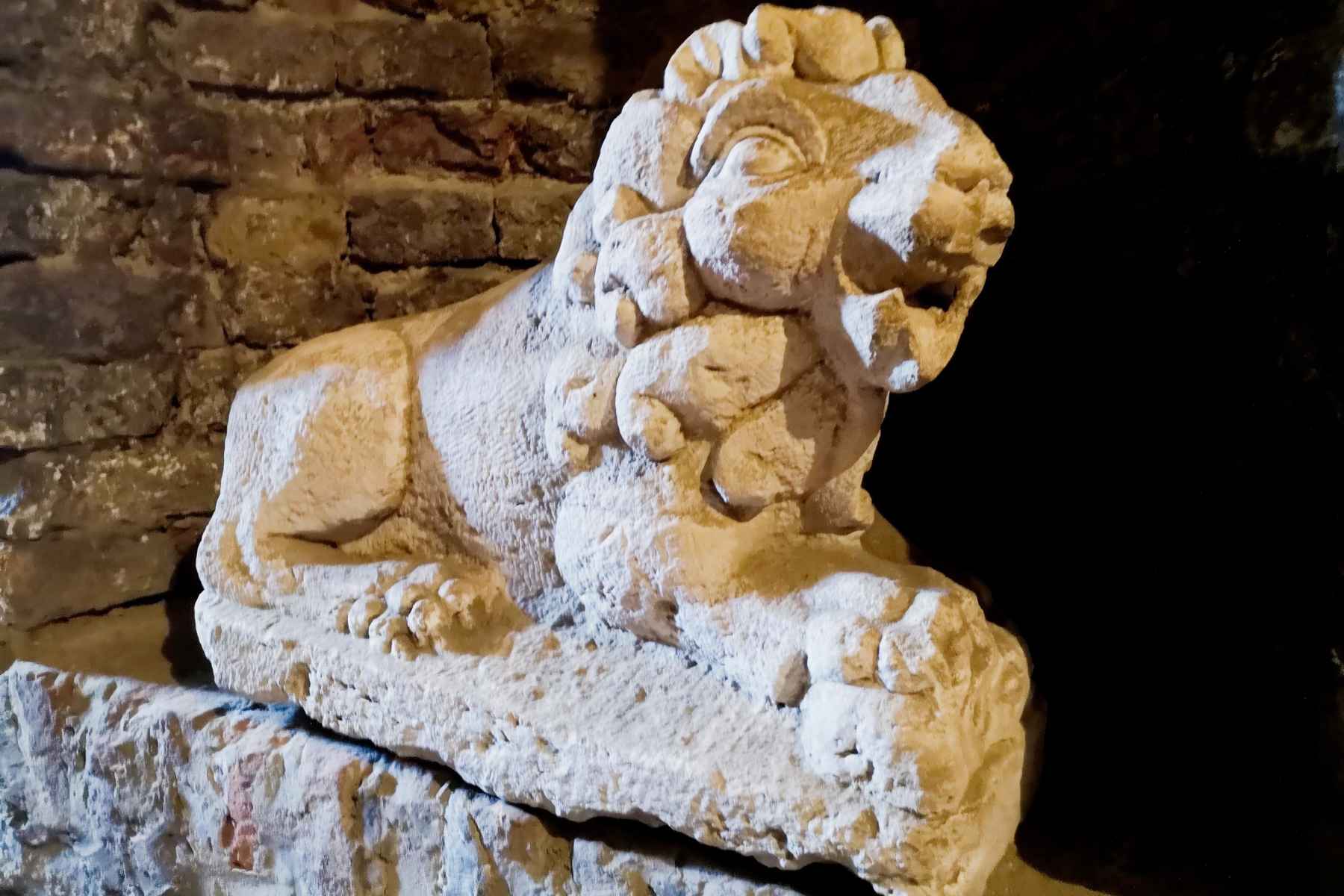
On both sides of the corridor there are niches with stone figures – probably decorative elements that once had a symbolic role, perhaps guardians of the entrance. When you reach the central part, the space widens slightly and allows movement through the corridor left or right, or straight to the well. If you choose the corridor, it follows a rectangular shape around the well. If you continue straight, you go up three stone steps leading to a safety railing, from which you can look down into the very center of the well.
The interior of the Roman Well is lit by a combination of artificial and natural light that enters through several circular openings above the well and side slits in the walls. These openings, in addition to light, also allow air to flow, so you can feel a gentle draft along the entire length. On the other side of the corridor, there are another set of parallel steps leading to the railing on the opposite side of the opening, where visitors most often observe the depth of the well.
A sturdy safety railing and an additional mesh are placed around the well, but caution is still advised – small objects can easily slip through the metal openings and fall into the darkness. Although descending the spiral stairs is no longer possible, openings and niches through which visitors once passed and lit the interior are still visible on the walls.
The Roman Well is just one of many hidden spots within the fortress, and exploring it often raises the question of what else can be discovered nearby and how everything connects.
At the same time, within the well itself, a smaller side corridor, parallel to the entrance, connects through an additional passage that can only be crossed while slightly bent over. The entire interior, from floor to vault, is built from stone and irregular stone bricks, giving the space a rough, authentic look reminiscent of medieval walls and enhancing the sense of mystery.
👁️ Legends, mysteries, and underground stories
Stories about the Roman Well have been told for centuries. Some explored it, others avoided it, and many wondered what truly lies hidden in its depths. It is often mentioned in connection with the underground of Belgrade, a network of stories and passages that may still conceal undiscovered secrets. Here are some of the most well-known tales.
Roman Well – dungeons and disappearances
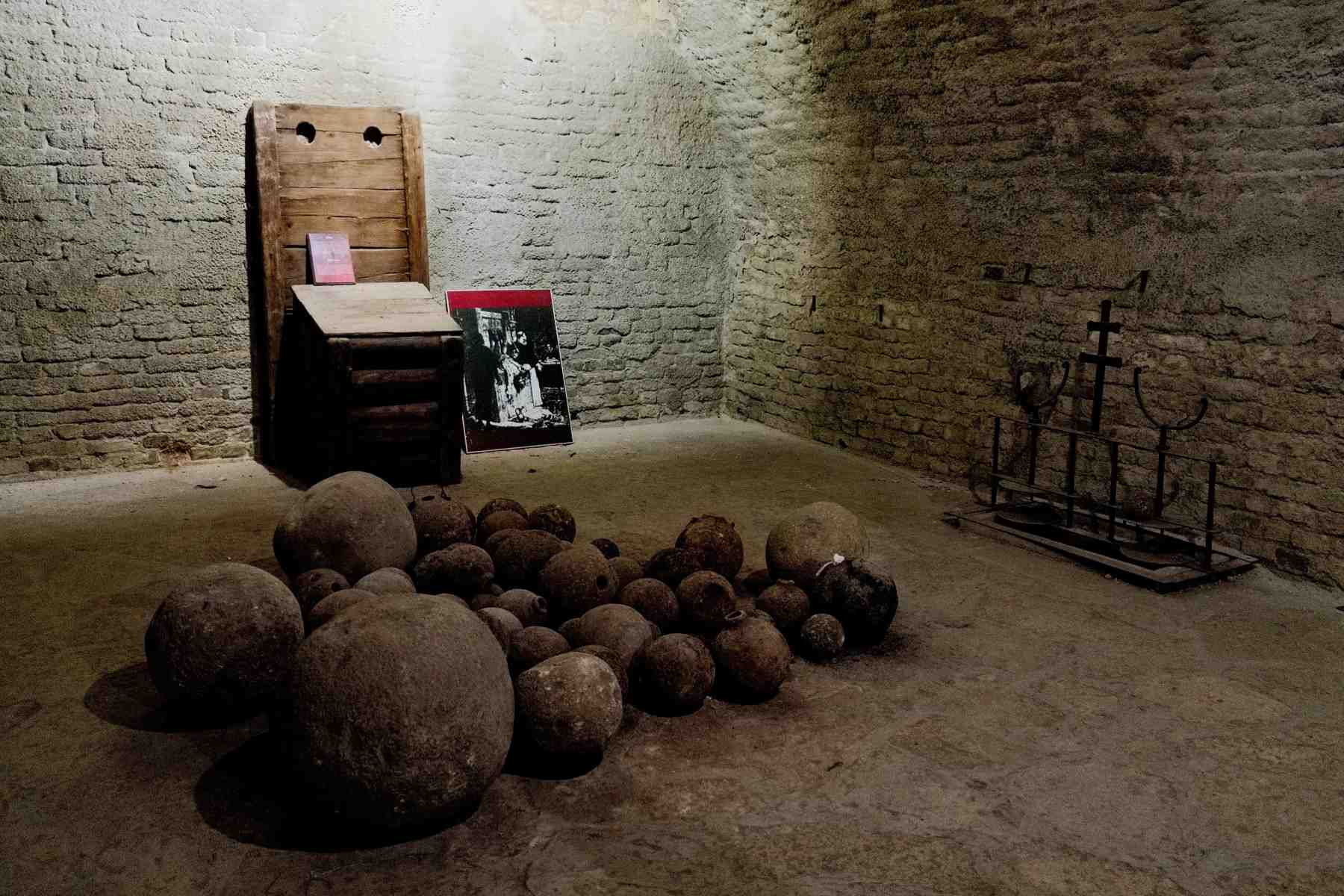
According to oral tradition, during wartime the Roman Well was also used as a prison. Some accounts mention German divers who allegedly disappeared while exploring its depths. Whether this is true remains uncertain, but the idea that the water hides secrets beneath the city is enough to capture the imagination of even the bravest visitors.
👉 Old Town – a story without end ♾️
The tunnel leading to Gardoš
One of the most famous legends speaks of a secret tunnel connecting the well with Gardoš Tower in Zemun. Although archaeologists have long dismissed this story, it continues to live on, passed down through generations and frequently mentioned among the mysteries of Belgrade.
🔮 Secrets of the depths of the Roman Well
🌀 Double spiral stairs carved into the stone
A unique architectural feature of the well — double spiral staircases carved directly into the rock. While one ascends, the other descends — as if creating an endless circle between light and darkness.
A unique architectural feature of the well — double spiral staircases carved directly into the rock. While one ascends, the other descends — as if creating an endless circle between light and darkness.
⚔️ Conspiracy, dungeon, and trial without return
Legend has it that conspirators who wanted to hand over Belgrade to the Turks were discovered, lowered to the bottom of the well, and condemned to fight each other for their lives. Knives thrown from the top marked the beginning of their horrific end.
Legend has it that conspirators who wanted to hand over Belgrade to the Turks were discovered, lowered to the bottom of the well, and condemned to fight each other for their lives. Knives thrown from the top marked the beginning of their horrific end.
🌊 German divers who never returned
During World War II, three German divers were lowered into the well in search of treasure. They never returned, and their bodies were never found. Since then, locals claim to have heard “the echo of metal and a whisper from the darkness” from the depths.
During World War II, three German divers were lowered into the well in search of treasure. They never returned, and their bodies were never found. Since then, locals claim to have heard “the echo of metal and a whisper from the darkness” from the depths.
🌌 Orpheus’s path to the underworld
According to belief, the Roman Well is the “navel of the world” — a passage through which Orpheus descended to Hades. At that place, as the legend goes, the light of day still gets lost in eternal darkness.
According to belief, the Roman Well is the “navel of the world” — a passage through which Orpheus descended to Hades. At that place, as the legend goes, the light of day still gets lost in eternal darkness.
💀 The tragic fate of Lena Knićanin and Jelena Marković
Two women, suspected of attempting to assassinate King Milan Obrenović in 1882, were imprisoned in the Roman Well. After some time, they were found dead. Whether it was revenge, suicide, or something else — still remains unknown.
Two women, suspected of attempting to assassinate King Milan Obrenović in 1882, were imprisoned in the Roman Well. After some time, they were found dead. Whether it was revenge, suicide, or something else — still remains unknown.
🧭 How to visit the Roman Well
If you’re in the mood for exploration, visiting the Roman Well is an experience that combines history, architecture, and the mystique of Belgrade.
The well is located within the Belgrade Fortress and is open to visitors for most of the year. Entry is symbolic, and as part of the tour you can also explore other underground spaces. A morning visit is recommended due to fewer crowds and a more pleasant temperature.
💬 Frequently asked questions about the Roman Well in Belgrade
🗺️ What is the Roman Well and where is it located in Belgrade?
The Roman Well is an underground structure from the 18th century, about 51 meters deep. It is located in the Upper Town of Belgrade Fortress at Kalemegdan, near the Victor Monument.
🕐 What are the opening hours of the Roman Well at Kalemegdan?
Opening hours are from 11:00 to 19:00 (April–September) and from 10:00 to 17:00 in October. The site is open Tuesday to Sunday, while Monday is closed.
💰 How much is the ticket for the Roman Well in Belgrade?
The ticket price is 170 RSD for adults, while students, pupils, and pensioners pay 100 RSD.
📍 Is the Roman Well part of Kalemegdan Fortress?
Yes, the Roman Well is part of Belgrade Fortress, located within Kalemegdan Park.
📜 Why is it called the Roman Well if it is not Roman?
The name dates back to the 19th century when people believed it was built by the Romans, although it was actually constructed by the Austrians.
🗝️ What legends are connected to the Roman Well?
The most famous include stories about a secret tunnel to Gardoš, missing divers, and underground passages beneath Belgrade.
🌍 Is the Roman Well worth visiting in Belgrade?
Yes, it is one of the most unique attractions at Kalemegdan Fortress, especially for visitors interested in history and unusual places.
🌒 Why the visit is worth it
Visiting the Roman Well is not just a tour – it’s an experience caught between history and legend. As you stand on the edge and imagine the spiral stairs disappearing into the darkness, it’s easy to feel the cold air and the echo of steps that once descended those narrow passages. Although now closed for descent, this place still evokes the same sense of awe and mystery. Thanks to its architecture and the stories told, the Roman Well regularly appears on lists of Belgrade’s attractions. If you’re searching for places with soul, darkness, and unforgettable stories, the Roman Well is an unavoidable point of every Belgrade adventure.
📜 Don’t miss: The Roman Well is located right next to Kalemegdan – a perfect mix of nature and history in the heart of the city! Explore the walls of the fortress, walk through the park, and discover another dimension of your visit.
🧭 How to get to the Roman Well
Whether you come on foot, by car, or by public transport – the Roman Well is easily accessible from all parts of the city.
🚗 Parking nearby
For those coming by car, the closest option is Kalemegdan parking lot – directly within the Fortress complex. Nearby there is also Vidin Gate parking lot, but keep in mind that these are smaller lots that fill up quickly. Alternatively, you can use larger parking lots such as Milan Gale Muškatirović parking lot and Donji Grad parking lot, both with over 300 spaces.
Street parking is available in the surrounding streets, but pay attention to parking zones and payment methods.
🚌 Public transport
If you opt for public transport, several lines are available, with the closest stops near the Roman Well being:
Braće Baruh: trams 2, 2L, 5 and 10, buses 24 and 79.
Pristanište: trams 2 and 11.
Studentski trg: trolleybuses 28, 29 and 41, buses 22A, 31, EKO2 and minibus line E9.
Enjoy a walk through the Belgrade Fortress and Kalemegdan Park – the approaches are beautifully landscaped, and the paths lead you to the entrance of the Roman Well. Regardless of your mode of transport, the adventure begins as soon as you step into this mysterious place.
📍 Where is the Roman Well located?
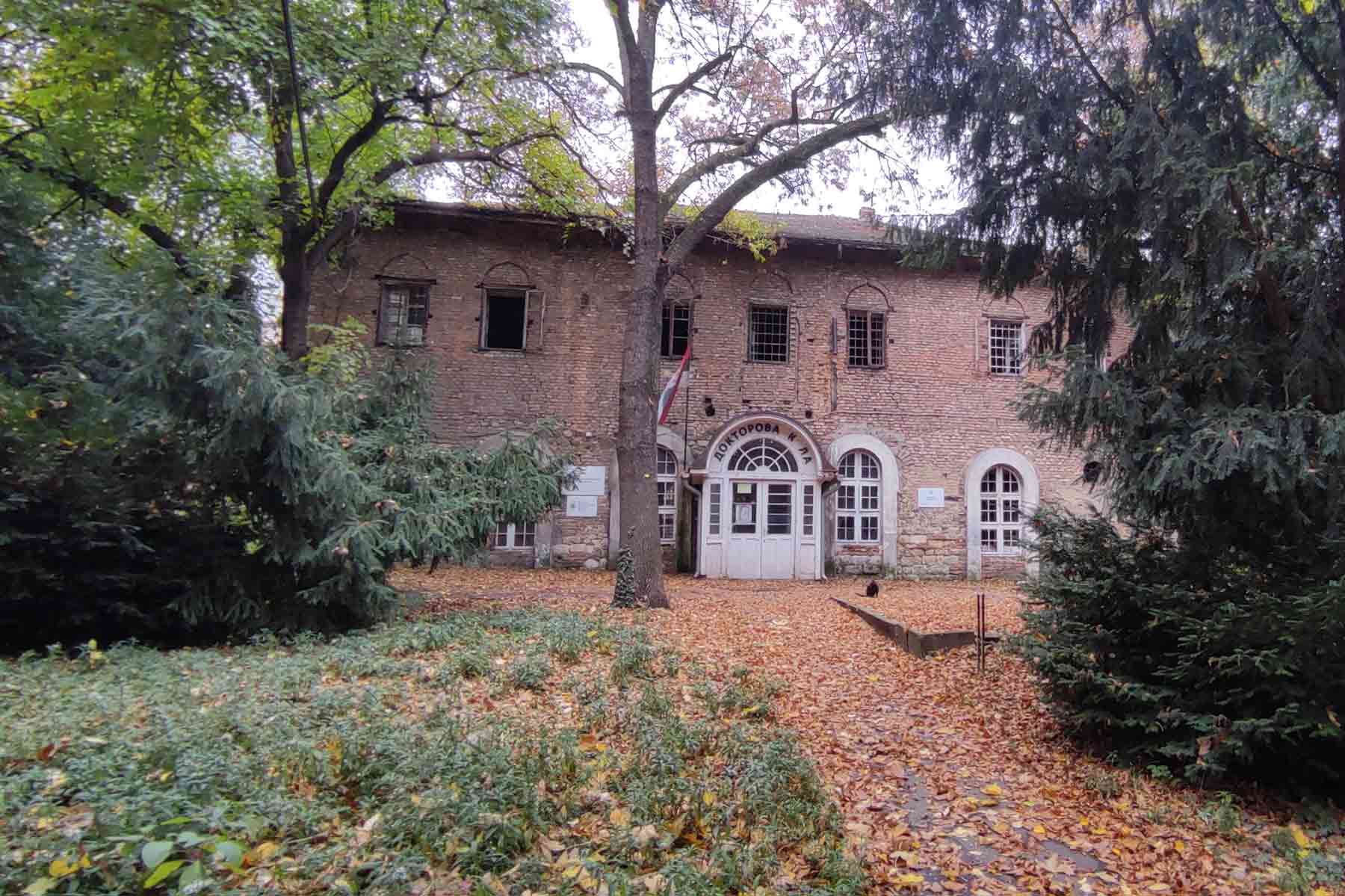
It is located within the municipality of Stari Grad in Belgrade, in the part of the fortress that most often attracts visitors interested in history and mystery. More precisely, it lies in the Upper Town of Belgrade Fortress, not far from the King’s Gate and the viewpoint overlooking the confluence of the Sava and Danube rivers, near the plateau by the Victor Monument.
On the map below, you can see the exact location, which can help you plan your visit—whether you are arriving by car, public transport, or on foot.
🎢 Want more ideas for fun in Belgrade?
Discover the guide “Fun in Belgrade” – find more great locations like Dino Park, Luna Park, and Tropikarium.